商品描述
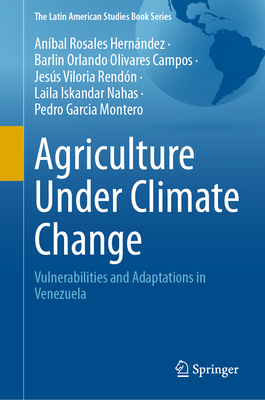
This book focuses on the intersection of climate change and agriculture, specifically addressing how climate variability and change impact agricultural systems in Venezuela. The main topics include climate variability, its effects on crop production, regional differences in agricultural vulnerability, and practical strategies for adaptation and mitigation. The book explores the challenges faced by Venezuelan farmers, from increasing temperatures and erratic precipitation to extreme weather events like droughts and floods. It also presents strategies for adapting agricultural practices, enhancing soil health, and improving water management to build resilience. This book is novel because no comprehensive work has been published before that addresses these issues in the Venezuelan context. It fills a significant gap in the literature by providing a localized, in-depth analysis of climate change's impact on agriculture. The book is important because it offers farmers, policymakers, and researchers actionable insights into sustainable practices, aiming to solve the problem of increasing vulnerability in Venezuela's agricultural sector. It provides solutions to ensure food security and environmental sustainability in the face of a changing climate.
商品描述(中文翻譯)
這本書專注於氣候變遷與農業的交集,特別是探討氣候變異和變遷如何影響委內瑞拉的農業系統。主要主題包括氣候變異、其對作物生產的影響、農業脆弱性的區域差異,以及適應和減緩的實用策略。書中探討了委內瑞拉農民所面臨的挑戰,從氣溫上升和降水不穩定到極端天氣事件,如乾旱和洪水。它還提出了適應農業實踐、增強土壤健康和改善水資源管理以建立韌性的策略。這本書具有創新性,因為在委內瑞拉的背景下,之前並沒有綜合性的著作針對這些問題進行探討。它填補了文獻中的一個重要空白,提供了氣候變遷對農業影響的本地化、深入分析。這本書的重要性在於它為農民、政策制定者和研究人員提供了可行的見解,旨在解決委內瑞拉農業部門日益脆弱的問題。它提供了解決方案,以確保在氣候變遷的背景下,食品安全和環境可持續性。
作者簡介
Barlin Orlando Olivares Campos completed his Ph.D. Cum Laude in Agricultural, Food, Forestry Engineering, and Sustainable Rural Development (International Mention) from the Agrifood Campus of International Excellence (CeiA3) of the University of Cordoba (UCO), Spain (2022). He was awarded a scholarship from the Iberoamerican Postgraduate University Association (AUIP). His outstanding scientific activity earned him the UCO Extraordinary Ph.D Award in 2022 and the National Award for Relevant Doctoral Thesis from the Spanish National Research Council (CSIC) in 2024. He is an Agricultural Engineer from the Faculty of Agronomy of the Central University of Venezuela (2009), obtaining the Recognition for the Best Final Degree Project and a master's degree in Environmental Technology from the International University of Andalusia, Spain (2015) through a Carolina Foundation scholarship. He started in the scientific field in 2008, when he obtained a scholarship to stay at the Water Center for Arid and Semi-arid Zones of Latin America and the Caribbean (CAZALAC) based in Chile, within the framework of the UNESCO International Hydrological Program. Later, he was a young researcher at the National Institute of Agricultural Research (INIA) of Venezuela from September 2009 to January 2014, carrying out scientific activities and knowledge transfer to farmers. At the same time, he was an instructor professor in the agricultural climatology department of the National Experimental Polytechnic University of the Bolivarian Armed Forces. He was also a researcher at the Institute for Advanced Studies Foundation, Venezuela (IDEA), during August 2014 for the scientific-technical dissemination of agricultural biotechnology, and finally a researcher at the National Institute of Meteorology and Hydrology, Venezuela (INAMEH) (January 2016- May 2017), generating scientific production of the agroecology zoning of crops. He has more than 15 years of experience in research on agri-food systems and has significantly advanced the generation of knowledge in agricultural sciences through the use of sophisticated algorithmic models of machine learning. He is currently a member of the Biodiversity Management Research Group (GESBIO) at the UCO, where he works as a data scientist developing the Federated Data Space for Citrus and as a consultant for the FAO in machine learning. Also, he is an honorary associate professor in Food Bromatology for the Bachelor's Degree in Food Science and Technology at the UCO. He is the author of an outstanding scientific production of journal articles, books, and chapters in book, also. He has participated in the supervision of thesis and conference presentations, and obtained various fellowships, accreditations, and recognitions, as well as participation in projects for the promotion and dissemination of science in agricultural spaces. He has carried out nine research stays in research institutes and universities of international prestige in Argentina, Chile, Costa Rica, Colombia, Ecuador, Spain, and Panama. Aníbal Rosales Hernández is an Agronomist, graduated from the Central University of Venezuela (UCV) in 1970. He obtained a Master of Science and a PhD from Cornell University, USA, in 1981. He is currently a retired professor of soils at UCV-Agronomy. He served as Coordinator of the Graduate Program in Soil Science and Director of the Soil Institute. He designed and established the national soil collection of Venezuela at UCV. With permission from UCV, he served as General Director of Information and Research at the Ministry of Environment and Renewable Natural Resources of Venezuela, responsible for national inventories of water, soils, and vegetation. He established the National Center for Plant Genetic Resources and Biodiversity and the Amazon Environmental Research Center. He was a member of the Venezuelan Delegation for the preparation of the United Nations Framework Convention on Climate Change and before the Global Environmental Facility (GEF). He was a professor of Watershed Management at the Center for Development Studies (CENDES) of UCV. He was a member of the Working Teams of the Hydroelectric Basin Evaluation Projects and the Upper Guárico River Basin, which supplies water to the capital city of Caracas. He has conducted and led environmental studies and soil and land evaluations, some for the energy and oil sector. He has been a consultant on environmental projects for the World Bank, the GEF (member of the PIF formulation team for the Canaima National Park project, Venezuela), and the Inter-American Development Bank. After he retired from UCV, he served as Operations Manager for the international environmental firm Ecology and Environment S.A., based in Caracas, leading environmental studies, especially in the oil and gas sector. He has participated in the following recent publications: (i) Coordinator of the Agriculture chapter of the 2nd Climate Change Report of Venezuela (ANIHVEN and ACFIMAN), ongoing until 2025; (ii) Team member (co-author) of the project "Strategies for Agro-Export in the Context of Future Development Scenarios of Venezuela." Orinoco Group and IICA 2023; (iii) Coordinator and co-author of the proceedings of the Forum-Workshop "Harmonization of Agricultural and Urban Uses for the Sustainable Development of the Lake Valencia Depression," Orinoco Group-SVCS-ANIHVEN 2021; (iv) Coordinator and co-author of the integrated watershed management plan: case of the upper Guárico River basin. IICA and Orinoco Group 2020; (v) Co-author of the works: "Mapping projected variations of temperature and precipitation due to climate change in Venezuela" and "Projected Effect of Climate Change on Land Suitability for Maize Cultivation in the Western Plains of Venezuela"; (vi) Promoter of the GeoVenezuela publication and co-author of the chapter "Soil Geography of Venezuela" Fundación Empresas Polar 2007; (vii) Co-editor of the book "Water in Venezuela: A Scarce Resource", and co-author of the following chapters: "Watersheds and Their Integrated Management," "Research and Human Resource Training Agenda for the Integrated Use of Water," and "Final Message." Fundación Empresas Polar, 2015, Caracas. Jesús A. Viloria R. is an Agricultural Engineer who graduated from the Central University of Venezuela, where he also earned a Master of Science degree in Soil Science. His academic journey culminated with a Doctor of Philosophy degree from the University of Oxford in 1989, following his specialization in Photointerpretation Applied to Soil Studies at CIAF in Colombia. This solid academic background shaped his comprehensive vision to approach soil studies through science, technology, and territorial planning. For over twenty-five years, Dr. Viloria served as a professor and researcher at the Faculty of Agronomy of the Central University of Venezuela, teaching undergraduate, master's, and doctoral courses, while also holding leadership roles as Head of the Department of Soil Science and Director of the Institute of Soil Science. His passion for teaching is reflected in his supervision of more than 35 undergraduate and graduate research projects, mentoring generations of professionals committed to the sustainable management and conservation of soil resources. His intellectual production is extensive, authoring and co-authoring 39 scientific articles published in peer-reviewed journals, 29 technical publications and book chapters, and presenting 61 papers at national and international scientific events. These contributions have strengthened knowledge in areas such as soil science, agricultural land suitability analysis, geographic information systems, remote sensing, and quantitative geospatial data analysis. Currently, he combines his status as an Active Retired Professor with consultancy work for international organizations such as the Inter-American Development Bank, IICA, and PRO-VITA, leading projects on soil analysis, mapping, and sustainable crop management across Latin America and Africa. His commitment to science and society continues to leave a profound mark on research and the development of solutions for rational soil and land management. Laila Iskandar Nahas is an Agricultural Engineer who graduated from the Faculty of Agronomy at the Central University of Venezuela (UCV) in 1990, with postgraduate studies in Ecology at the Faculty of Sciences of the same institution, where she specialized in Landscape Ecology and Watershed Conservation. Throughout her academic and professional career, she has played key roles in training and disseminating knowledge on environmental, ecological, and sustainability topics. She was a founding professor of the Postgraduate Program in Environmental Engineering and the diploma course "Topics in Ecology, Environment, and Sustainability for University Teaching" at Andrés Bello Catholic University (UCAB), where she also established the "Ecology, Environment, and Sustainability" Institutional Chair, which she has been teaching since 2015. Additionally, she has been a faculty member in the Geography School at UCV, teaching Soil Science, and at the School of Environmental Engineering at the Maritime University of the Caribbean, where she taught the course on Vegetation Cover Restoration. Her experience as an independent consultant covers various areas related to ecosystem conservation, watershed management, sustainable agriculture, agroforestry systems, and integrated water management. She has collaborated with institutions such as the Inter-American Institute for Cooperation on Agriculture (IICA), the Sociological Studies Foundation (FUNDES), Nestlé Venezuela, the Provincial Bank Foundation, HIDROCAPITAL, Empresas Polar Foundation, and the Hatillo Municipality, participating in capacity-building projects, water resource management, soil and water conservation, school gardens, and sustainable agricultural practices since 2004. Since 2015, she has been part of the Orinoco Sustainable Development Group, contributing to regional sustainable development initiatives. In 2024, she coordinated and co-authored the project "Assessment of Land Suitability in the Protected Area of Greater Caracas for Shade-Grown Coffee Production" for IICA-Venezuela. She also participated as a member of the technical team in the project "Strategies for Agro-Export in the Context of Future Development Scenarios for Venezuela" (2022), and was a member of the coordinating team and co-author of the profile for the integrated watershed management plan for the upper Guárico River basin, developed for IICA-Costa Rica (2019-2020). Her international experience includes serving as a consultant on the "Smart Agricultural Practices" project in Belize for the Tropical Agricultural Research and Higher Education Center (CATIE) of Costa Rica in 2018, in response to the impacts of climate change on the Central American agricultural sector. Additionally, she was a co-editor of the book "Water in Venezuela: A Scarce Resource," published by the Empresas Polar Foundation in 2015. Engineer Iskandar Nahas has contributed to various publications related to ecology, water management, and conservation, and has served as a speaker and workshop facilitator for youth and adults on environmental topics. Her work has been presented at multiple scientific conferences and academic publications, including her contribution to the "Venezuela History Dictionary" and to Interciencia journal, where she addressed topics such as ecological carrying capacity. Her commitment to sustainability, environmental conservation, and applied research positions her as a leading figure in ecology, natural resource management, and sustainable agriculture in Venezuela and the region. Pedro García Montero was born in Venezuela and graduated as an Agronomist from the Central University of Venezuela in 1975. From the beginning, he showed a deep interest in soils and natural resources, which led him to specialize in Soil Science, earning his Master of Science at the University of Florida in 1984. His career was marked by scientific rigor and a strong commitment to the sustainable management of Venezuela's environment, qualities that would define his professional legacy. Over five decades of experience, Pedro García Montero became a leading figure in soil studies, natural resource inventory and evaluation, environmental planning, baseline environmental studies, and territorial planning. His role as a senior consultant allowed him to lead and advise strategic projects, earning recognition for his integrated vision in environmental assessment and watershed management, always oriented towards sustainable development. He held high-responsibility positions in key institutions, such as Coordinator of the Natural Resources Inventory Project for the Guayana Region at CVG Tecmin, Director of Soils, Vegetation and Fauna, Director of Land Conservation and Evaluation, and Director-General of the Autonomous Service for Environmental Development of the Amazon (SADA-AMAZONAS) within the Ministry of Environment and Renewable Natural Resources. Currently, he continues to contribute through the Orinoco Group, reflecting on pathways for a post-oil Venezuela. His passion for teaching is reflected in twenty-five years of undergraduate and postgraduate education at Venezuelan universities, including the Central University of Venezuela, Andrés Bello Catholic University, and the Experimental University of Guayana. He mentored several generations of professionals, who highlight his conceptual clarity, commitment to applied science, and constant motivation to connect knowledge with the country's realities. He has left a valuable bibliographic legacy with over thirty publications, including chapters in internationally recognized books. His contributions include, among others, studies such as "Tepui Peatlands: setting and features" (Zinck & García, 2011) and "Properties and Classification of the Tepui Peats" (García, Schargel& Zinck, 2011), which delve into the peatlands of the Tepuis and their paleoenvironmental significance; "Territorial Zoning Based on Geopedologic Information: Case Study in the Caroní River Basin, Venezuela" (García, 2016), where he proposes applied methodologies for territorial planning; and "A vision on the territorial planning of the Amazonas state as a basis for its sustainable development" (García, 2022), which offers a strategic reflection for sustainable development in the Venezuelan Amazon; Psammic Peinobiomes: Nutrient-Limited Ecosystems of the Upper Orinoco and Rio Negro Basins. A. Zinck, O. Huber, P. Garcia and E. Medina Editors (2023), focusing on the characterization and genesis of these unique Amazonian ecosystems. His work transcends disciplines and borders, integrating geomorphology, pedology, and ecology to benefit environmental management in Venezuela and Latin America.
作者簡介(中文翻譯)
巴林·奧蘭多·奧利瓦雷斯·坎波斯於2022年在西班牙科爾多瓦大學(UCO)的國際卓越農業、食品、林業工程及可持續農村發展(國際提名)獲得優等博士學位。他獲得了伊比利亞美洲研究生大學協會(AUIP)的獎學金。他卓越的科學活動使他在2022年獲得UCO特別博士獎,並在2024年獲得西班牙國家研究委員會(CSIC)頒發的相關博士論文國家獎。他於2009年畢業於委內瑞拉中央大學農學院,獲得農業工程學位,並因最佳畢業專案獲得表彰,隨後於2015年通過卡羅萊納基金會獎學金在西班牙安達盧西亞國際大學獲得環境技術碩士學位。他於2008年開始進入科學領域,當時獲得獎學金前往智利的拉丁美洲及加勒比海乾旱及半乾旱地區水資源中心(CAZALAC),參與聯合國教科文組織國際水文計畫。隨後,他於2009年9月至2014年1月在委內瑞拉國家農業研究所(INIA)擔任年輕研究員,進行科學活動並向農民轉移知識。同時,他也是委內瑞拉玻利瓦爾武裝部隊國立實驗理工大學農業氣候學系的講師。他於2014年8月在委內瑞拉高級研究基金會(IDEA)擔任研究員,進行農業生物技術的科學技術傳播,並於2016年1月至2017年5月在委內瑞拉國家氣象與水文研究所(INAMEH)擔任研究員,生成作物的農業生態區劃的科學產出。他在農業食品系統研究方面擁有超過15年的經驗,並通過使用複雜的機器學習算法模型顯著推進了農業科學知識的生成。目前,他是UCO生物多樣性管理研究小組(GESBIO)的成員,擔任數據科學家,開發柑橘類的聯邦數據空間,並擔任FAO的機器學習顧問。此外,他還是UCO食品科學與技術學士學位的食品生物學名譽副教授。他是多篇期刊文章、書籍及書籍章節的作者,並參與論文及會議報告的指導,獲得多項獎學金、認證及表彰,並參與推廣及傳播農業科學的項目。他在阿根廷、智利、哥斯達黎加、哥倫比亞、厄瓜多爾、西班牙及巴拿馬的國際知名研究機構及大學進行了九次研究訪問。安尼巴爾·羅薩萊斯·埃爾南德斯是1970年畢業於委內瑞拉中央大學(UCV)的農學家。他於1981年在美國康奈爾大學獲得理學碩士及博士學位。目前是UCV農學院的退休土壤教授。他曾擔任土壤科學研究生課程的協調員及土壤研究所所長。他在UCV設計並建立了委內瑞拉的國家土壤樣本庫。在UCV的許可下,他曾擔任委內瑞拉環境及可再生自然資源部的資訊與研究總監,負責國家水資源、土壤及植被的清查。他建立了國家植物遺傳資源與生物多樣性中心及亞馬遜環境研究中心。他是委內瑞拉代表團成員,參與聯合國氣候變化框架公約的準備工作,並在全球環境基金(GEF)前任職。他曾在UCV的發展研究中心(CENDES)教授流域管理課程。他是水電流域評估項目及供應首都加拉加斯的上瓜里科河流域工作小組的成員。他進行並主導了環境研究及土壤與土地評估,其中一些針對能源及石油部門。他曾擔任世界銀行、GEF(委內瑞拉卡奈馬國家公園項目PIF制定小組成員)及美洲開發銀行的環境項目顧問。退休後,他擔任位於加拉加斯的國際環境公司生態與環境S.A.的運營經理,主導環境研究,特別是在石油和天然氣部門。他參與了以下近期出版物:(i)委內瑞拉第二次氣候變化報告的農業章節協調員(ANIHVEN和ACFIMAN),持續至2025年;(ii)項目“未來發展情境下的農業出口策略”團隊成員(共同作者),奧里諾科小組和IICA 2023;(iii)論壇研討會“農業與城市用途的協調以促進瓦倫西亞湖凹地的可持續發展”會議記錄的協調員和共同作者,奧里諾科小組-SVCS-ANIHVEN 2021;(iv)綜合流域管理計畫的協調員和共同作者:上瓜里科河流域案例,IICA和奧里諾科小組2020;(v)共同作者的作品:“氣候變化對委內瑞拉的溫度和降水預測變化的映射”和“氣候變化對委內瑞拉西部平原玉米種植土地適宜性的預測影響”;(vi)GeoVenezuela出版物的推廣者及“委內瑞拉土壤地理”章節的共同作者,基金會企業極地2007;(vii)書籍《委內瑞拉的水:稀缺資源》的共同編輯,並共同作者以下章節:“流域及其綜合管理”、“水的綜合利用研究與人力資源培訓議程”及“最終信息”。基金會企業極地,2015年,加拉加斯。赫蘇斯·A·維洛里亞·R.是畢業於委內瑞拉中央大學的農業工程師,並在同校獲得土壤科學的理學碩士學位。他的學術旅程於1989年在牛津大學獲得哲學博士學位,專攻土壤研究的遙感解釋。這一堅實的學術背景塑造了他通過科學、技術和區域規劃來研究土壤的全面視野。超過二十五年來,維洛里亞博士在委內瑞拉中央大學農學院擔任教授和研究員,教授本科、碩士及博士課程,同時擔任土壤科學系主任及土壤科學研究所所長。他對教學的熱情體現在他指導超過35個本科及研究生研究項目,培養了一代又一代致力於土壤資源可持續管理和保護的專業人才。他的智力產出豐富,著有及共同著作39篇發表於同行評審期刊的科學文章、29篇技術出版物及書籍章節,並在國內外科學活動中發表61篇論文。這些貢獻加強了土壤科學、農業土地適宜性分析、地理信息系統、遙感及定量地理空間數據分析等領域的知識。目前,他結合了活躍退休教授的身份,為國際組織如美洲開發銀行、IICA及PRO-VITA提供顧問服務,領導拉丁美洲和非洲的土壤分析、映射及可持續作物管理項目。他對科學和社會的承諾繼續在研究和發展合理的土壤和土地管理解決方案方面留下深刻的印記。萊拉·伊斯坎達·納哈斯是1990年畢業於委內瑞拉中央大學農學院的農業工程師,並在同校科學院進行生態學的研究生學習,專攻景觀生態學和流域保護。在她的學術和專業生涯中,她在環境、生態和可持續性主題的培訓和知識傳播中發揮了關鍵作用。她是安德烈斯·貝略天主教大學(UCAB)環境工程研究生課程及“環境、環境和可持續性大學教學主題”文憑課程的創始教授,並於2015年設立了“生態、環境和可持續性”機構講座。此外,她還在UCV地理學院擔任教職,教授土壤科學,並在加勒比海海事大學的環境工程學院教授植被覆蓋恢復課程。她作為獨立顧問的經驗涵蓋了生態系統保護、流域管理、可持續農業、農林系統及綜合水資源管理等多個領域。自2004年以來,她與美洲農業合作組織(IICA)、社會學研究基金會(FUNDES)、委內瑞拉雀巢、地方銀行基金會、HIDROCAPITAL、企業極地基金會及哈蒂洛市等機構合作,參與能力建設項目、水資源管理、土壤和水保護、學校花園及可持續農業實踐。自2015年以來,她成為奧里諾可持續發展小組的一員,為區域可持續發展倡議做出貢獻。2024年,她協調並共同撰寫了IICA-委內瑞拉的項目“評估大加拉加斯保護區的土地適宜性以進行陰影咖啡生產”。她還作為技術團隊成員參與了“未來發展情境下的農業出口策略”項目(2022),並是針對上瓜里科河流域的綜合流域管理計畫的協調團隊成員及共同作者,該計畫由IICA-哥斯達黎加開發(2019-2020)。她的國際經驗包括在2018年擔任哥斯達黎加熱帶農業研究與高等教育中心(CATIE)在貝爾哈的“智慧農業實踐”項目的顧問,以應對氣候變化對中美洲農業部門的影響。此外,她還是2015年由企業極地基金會出版的書籍《委內瑞拉的水:稀缺資源》的共同編輯。伊斯坎達·納哈斯工程師對生態、水資源管理和保護的各種出版物做出了貢獻,並擔任青少年和成人環境主題的演講者和研討會主持人。她的工作在多個科學會議和學術出版物中發表,包括她對《委內瑞拉歷史辭典》的貢獻及在Interciencia期刊中探討生態承載能力等主題。她對可持續性、環境保護和應用研究的承諾使她成為委內瑞拉及該地區生態學、自然資源管理和可持續農業的領軍人物。佩德羅·加西亞·門特羅出生於委內瑞拉,於1975年畢業於委內瑞拉中央大學,成為農學家。從一開始,他就顯示出對農業的熱情。