商品描述
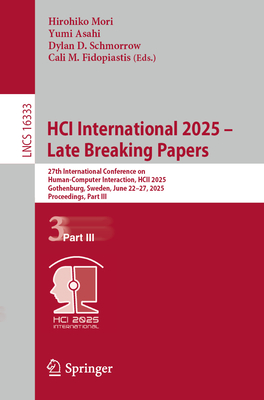
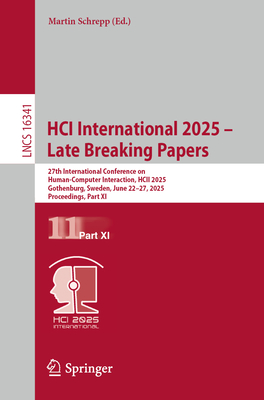
The 16-volume set LNCS 16331-16346 constitutes late breaking papers from the 27th International Conference on Human-Computer Interaction, HCI International 2025, held in Gothenburg, Sweden, during June 22-27, 2025. A total of 7972 individuals from academia, research institutes, industry, and government agencies from 92 countries submitted contributions. 1430 papers and 355 posters (as short research papers) were included in the volumes of the proceedings published just before the start of the conference. Additionally, 439 papers and 104 posters were included in the volumes of the proceedings published after the conference, as "Late Breaking Work". The papers were organized in topical sections as follows: Part I: Theoretical and Conceptual Advances in HCI; and User Interface and Interaction Design; Design for Inclusivity and Social Impact. Part II: Robotics, Embodied Agents, and Human-Robot Interaction; Smart Environments and Manufacturing Systems; Human-AI Interaction and Generative AI in Design; and Ethics, Privacy and Sustainability in Digital Systems. Part III: Human Experience in Virtual Environments; Human Factors in Intelligent and Autonomous Systems; and Computational Methods for Human Behavior Analysis. Part IV: Human Performance and Safety in Aviation; Human-Automation Teaming; Eye Tracking, Cognition, and Situation Awareness; and Innovations in Adaptive and Responsive Environments. Part V: Accessibility and Inclusive Interaction Design; Accessibility and Innovations in Intelligent Environments; and Human-Centered Technologies for Autism and Neurodiverse Populations. Part VI: Designing for Positive Change: Well-Being, Inclusion, and Social Impact; Cross-Cultural and Creative Design Futures; Design and Engineering of Mobility Experiences; and Human Factors, Safety, and Driver Assistance. Part VII: Social Media, Society, and Digital Communities; LLMs and Intelligent Agents in Social Computing and Security; Understanding User Behavior in Social Computing; and Security, Privacy, and Trust in Digital Environments. Part VIII: Frameworks and Computational Methods in XR; Human Factors and User Experience in XR; XR, Culture, and Immersive Heritage Experiences; Extended Reality in Healthcare and Medical Training; and Serious Games and Interactive Narratives. Part IX: Ergonomics and Digital Human Modeling; Digital Human Modeling in Fashion and Textiles; Artificial Intelligence and Smart Services in Digital Human Modeling; and Health Monitoring, Decision-Making, and Care Optimization. Part X: Generational Differences and Technology Acceptance in Older Adults; Healthy Lifestyle, Physical Activity, and Active Aging; Cognitive Health, Well-Being; and Preventive Care; Intelligent Systems, Safety, and Aging in Place; and Artificial Intelligence in Healthcare and Well-Being. Part XI: User Experience and Interaction for Positive Social Impact; User Experience Methods, Tools, and Metrics; User Experience in Education and Learning; and User Experience in Digital Heritage and Art. Part XII: User Experience in Product and Service Design; User Experience, AI, and Emerging Applications; Digital Innovation and Interactive Design for Cultural Heritage; and Technology-Driven Cultural Shifts: AI, Metaverse, and Digital Society. Part XIII: Human-Centered Perspectives on New Technologies Adoption and Impact; AI-Empowered Ageing, Education, and Healthcare; Advances in Commerce, Marketing, and Consumer Behavior; and Digital Transformation of Business and Governance. Part XIV: Immersive Technologies for Learning; Inclusive and Collaborative Learning Design; Adaptive Instructional Systems; AI, Data, and Intelligent Support in Education. Part XV: Human-Centered Artificial Intelligence: Frameworks and Lessons Learned; Frameworks and Approaches for Trustworthy and Explainable AI; Large Language Models - Capabilities, Biases, and Applications. Part XVI: Generative AI in Creativity and Design; Human-AI Interaction and Collaboration; and Mobile Technologies for Health, Education, and Digital Engagement.
商品描述(中文翻譯)
這16卷的LNCS 16331-16346包含了2025年6月22日至27日在瑞典哥德堡舉行的第27屆國際人機互動會議(HCI International 2025)的最新研究論文。來自92個國家的7972位來自學術界、研究機構、產業和政府機構的個人提交了貢獻。會議前發表的論文集中共包含1430篇論文和355篇海報(作為短期研究論文)。此外,會後發表的論文集中還包含439篇論文和104篇海報,作為「最新研究成果」。
這些論文按主題分為以下幾個部分:
第一部分:HCI的理論與概念進展;用戶界面與互動設計;包容性設計與社會影響。
第二部分:機器人技術、具身代理與人機互動;智慧環境與製造系統;人機智能互動與設計中的生成式AI;以及數位系統中的倫理、隱私與可持續性。
第三部分:虛擬環境中的人類體驗;智能與自主系統中的人因工程;以及人類行為分析的計算方法。
第四部分:航空中的人類表現與安全;人機協作;眼動追蹤、認知與情境意識;以及自適應與響應環境中的創新。
第五部分:可及性與包容性互動設計;智能環境中的可及性與創新;以及針對自閉症與神經多樣性人群的人本技術。
第六部分:設計以促進正向變革:福祉、包容性與社會影響;跨文化與創意設計未來;移動體驗的設計與工程;以及人因工程、安全與駕駛輔助。
第七部分:社交媒體、社會與數位社群;社交計算與安全中的大型語言模型(LLMs)與智能代理;理解社交計算中的用戶行為;以及數位環境中的安全、隱私與信任。
第八部分:XR中的框架與計算方法;XR中的人因工程與用戶體驗;XR、文化與沉浸式遺產體驗;醫療保健與醫學訓練中的擴增實境;以及嚴肅遊戲與互動敘事。
第九部分:人體工學與數位人類建模;時尚與紡織中的數位人類建模;數位人類建模中的人工智慧與智慧服務;以及健康監測、決策與護理優化。
第十部分:老年人的世代差異與技術接受度;健康生活方式、身體活動與積極老化;認知健康、福祉與預防護理;智能系統、安全與居家老化;以及醫療保健與福祉中的人工智慧。
第十一部分:為正向社會影響而設計的用戶體驗與互動;用戶體驗的方法、工具與指標;教育與學習中的用戶體驗;以及數位遺產與藝術中的用戶體驗。
第十二部分:產品與服務設計中的用戶體驗;用戶體驗、AI與新興應用;文化遺產的數位創新與互動設計;以及技術驅動的文化變遷:AI、元宇宙與數位社會。
第十三部分:對新技術採用與影響的人本觀點;AI驅動的老化、教育與醫療保健;商業、行銷與消費行為的進展;以及商業與治理的數位轉型。
第十四部分:學習的沉浸式技術;包容性與協作學習設計;自適應教學系統;教育中的AI、數據與智能支持。
第十五部分:以人為中心的人工智慧:框架與經驗教訓;值得信賴與可解釋的AI的框架與方法;大型語言模型的能力、偏見與應用。
第十六部分:創意與設計中的生成式AI;人機互動與協作;以及健康、教育與數位參與的移動技術。