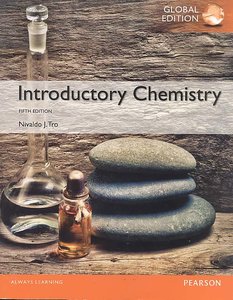
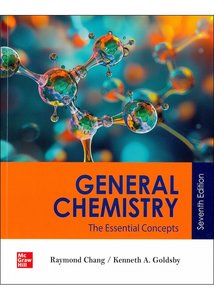
Principles of Chemistry: A Molecular Approach, 2/e (PNIE)
暫譯: 化學原理:分子方法(第二版)
Tro

- 出版商: Pearson FT Press
- 出版日期: 2013-01-01
- 售價: $1,200
- 貴賓價: 9.8 折 $1,176
- 語言: 英文
- 頁數: 896
- 裝訂: 平裝
- ISBN: 1292026243
- ISBN-13: 9781292026244
-
相關分類:
化學 Chemistry
下單後立即進貨 (約5~7天)
商品描述
- A streamlined, brief text that covers all the necessary topics required for a one- or two-semester general chemistry course, for the professor who wants a book that only covers the topics they need. At only 20 chapters, this text has no separate nonmetals, metals or coordination compounds chapters.
- Tro's engaging writing style entices the reader into the chemistry by discussing a relevant, real-life example first. He then weaves in the chemistry into relevant examples and problems thus providing a context for greater understanding and comprehension.
- Annotated molecular art and multipart images help students see the relationship between the formulas they write down on paper (symbolic), the world they see around them (macroscopic), and the atoms and molecules that compose that world (molecular).
- Two- and three-column problem solving examples help students understand the logic and purpose of each step in the problem-solving process.
- Tro acts as the voice of the professor by providing the written explanation of how to solve the problem in the left-hand column.
- In the right-hand column, Tro solves in parallel the problem as it was just described in the left-hand column. This simulates the in-class experience when a professor works a problem on the board and explains each step along the way.
- Tro's procedure maps not only work out a problem for students, but also apply the same methodology to another problem side by side.
商品描述(中文翻譯)
- 一本精簡且簡短的教材,涵蓋一或兩學期一般化學課程所需的所有主題,適合希望僅涵蓋所需主題的教授。這本書只有20章,沒有單獨的非金屬、金屬或配位化合物章節。
- Tro引人入勝的寫作風格通過首先討論相關的現實生活範例來吸引讀者進入化學領域。然後,他將化學知識融入相關的範例和問題中,從而提供更大的理解和認知背景。
- 附註的分子藝術和多部分圖像幫助學生看到他們在紙上寫下的公式(符號)、他們周圍所見的世界(宏觀)以及構成該世界的原子和分子(分子)之間的關係。
- 二欄和三欄的問題解決範例幫助學生理解問題解決過程中每一步的邏輯和目的。
- Tro在左側欄中提供了如何解決問題的書面解釋,充當教授的聲音。
- 在右側欄中,Tro平行解決剛在左側欄中描述的問題。這模擬了教授在課堂上在黑板上解題並逐步解釋的經驗。
- Tro的程序圖不僅為學生解決了一個問題,還將相同的方法應用於另一個問題,並並排展示。
作者簡介
Nivaldo Tro is a Professor of Chemistry at Westmont College in Santa Barbara, California, where he has been a faculty member since 1990. He received his Ph.D. in chemistry from Stanford University for work on developing and using optical techniques to study the adsorption and desorption of molecules to and from surfaces in ultrahigh vacuum. He then went on to the University of California at Berkeley, where he did postdoctoral research on ultrafast reaction dynamics in solution. Since coming to Westmont, Professor Tro has been awarded grants from the American Chemical Society Petroleum Research Fund, from Research Corporation, and from the National Science Foundation to study the dynamics of various processes occurring in thin adlayer films adsorbed on dielectric surfaces. He has been honored as Westmont's outstanding teacher of the year three times and has also received the college's outstanding researcher of the year award. Professor Tro lives in Santa Barbara with his wife, Ann, and their four children, Michael, Ali, Kyle, and Kaden. In his leisure time, Professor Tro enjoys surfing, mountain biking, being outdoors with his family, and reading good books to his children.
作者簡介(中文翻譯)
Nivaldo Tro 是加州聖巴巴拉的西蒙特學院(Westmont College)化學教授,自1990年以來一直擔任該校教職。他在史丹佛大學(Stanford University)獲得化學博士學位,研究主題為開發和使用光學技術來研究分子在超高真空中對表面的吸附和脫附。隨後,他前往加州大學伯克利分校(University of California at Berkeley)進行超快反應動力學的博士後研究。自來到西蒙特學院以來,Tro 教授獲得了美國化學學會石油研究基金(American Chemical Society Petroleum Research Fund)、研究公司(Research Corporation)和國家科學基金會(National Science Foundation)的資助,以研究吸附在介電表面上的薄層膜中各種過程的動力學。他曾三次被評選為西蒙特學院的傑出教師,並獲得該校的傑出研究者獎。Tro 教授與妻子 Ann 及四個孩子 Michael、Ali、Kyle 和 Kaden 住在聖巴巴拉。在閒暇時間,Tro 教授喜歡衝浪、山地自行車、與家人一起戶外活動,以及為孩子們朗讀好書。
目錄大綱
1. Matter, Measurement, and Problem Solving
2. Atoms and Elements
3. Molecules, Compounds, and Chemical Equations
4. Chemical Quantities and Aqueous Reactions
5. Gases
6. Thermochemistry
7. The Quantum-Mechanical Model of the Atom
8. Periodic Properties of the Elements
9. Chemical Bonding I: Lewis Theory
10. Chemical Bonding II: Molecular Shapes, Valence Bond Theory, and Molecular Orbital Theory
11. Liquids, Solids, and Intermolecular Forces
12. Solutions
13. Chemical Kinetics
14. Chemical Equilibrium
15. Acids and Bases
16. Aqueous Ionic Equilibrium
17. Free Energy and Thermodynamics
18. Electrochemistry
19. Radioactivity and Nuclear Chemistry
目錄大綱(中文翻譯)
1. Matter, Measurement, and Problem Solving
2. Atoms and Elements
3. Molecules, Compounds, and Chemical Equations
4. Chemical Quantities and Aqueous Reactions
5. Gases
6. Thermochemistry
7. The Quantum-Mechanical Model of the Atom
8. Periodic Properties of the Elements
9. Chemical Bonding I: Lewis Theory
10. Chemical Bonding II: Molecular Shapes, Valence Bond Theory, and Molecular Orbital Theory
11. Liquids, Solids, and Intermolecular Forces
12. Solutions
13. Chemical Kinetics
14. Chemical Equilibrium
15. Acids and Bases
16. Aqueous Ionic Equilibrium
17. Free Energy and Thermodynamics
18. Electrochemistry
19. Radioactivity and Nuclear Chemistry