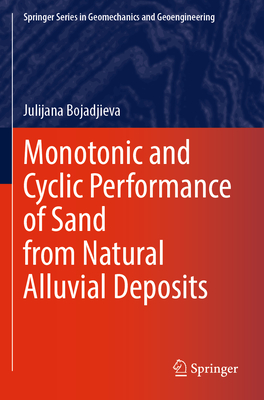
Geotechnical Modeling and Intelligent Systems
暫譯: 岩土工程建模與智慧系統
Zhao, Gao-Feng
- 出版商: Springer
- 出版日期: 2025-10-09
- 售價: $2,570
- 貴賓價: 9.5 折 $2,441
- 語言: 英文
- 頁數: 435
- 裝訂: Hardcover - also called cloth, retail trade, or trade
- ISBN: 9819669243
- ISBN-13: 9789819669240
-
相關分類:
Machine Learning
海外代購書籍(需單獨結帳)
相關主題

商品描述
商品描述(中文翻譯)
這本開放存取的書籍提供了有關土木工程模擬的研究主題的見解。隨著計算能力和人工智慧的發展,土木工程的研究方法逐漸從現場調查和物理實驗轉向模擬和預測。通過模擬,可以推斷工程結構對土壤和岩石質量的影響,以及它們對自然災害(如地震、滑坡和泥石流)的反應,從而提前規劃減災措施。
書中,讀者將發現關於微生物土壤穩定、有限元素模擬、離心模型和機器學習應用的前沿研究。主題包括先進的材料特性描述、隧道和坡度的預測建模、AI增強的監測系統,以及深基坑和採礦沉降的風險減緩策略。這些貢獻展示了智能系統如何在各種土木工程情境中優化設計和安全性。
本卷是研究人員、工程師和研究生尋求利用智能技術以實現更高效、準確和韌性的土木工程解決方案的重要資源。通過理論、實驗和智能建模的整合,它提供了對於在快速演變的技術環境中基礎設施未來的前瞻性視角。
作者簡介
Dr. Gaofeng Zhao, Professor at Tianjin University's School of Civil Engineering, is a leading expert in computational geomechanics. He earned his Ph.D. from EPFL, Switzerland, and was formerly a senior lecturer at The University of New South Wales, Australia. Dr. Zhao developed NumericalBox3D, a high-performance simulation software widely applied in rock engineering. His contributions to the Distinct Lattice Spring Model (DLSM) and Four-Dimensional Lattice Spring Model (4D-LSM) have advanced applications in underground engineering and material science. With over 100 SCI-indexed publications and an H-index of 33, he is recognized as a Stanford Top 2% Global Scientist. He serves as Associate Editor for the International Journal of Rock Mechanics and Mining Sciences (IJRMMS) and Intelligent Geoengineering (IGEO). Additionally, he is the President of the Commission on Discontinuous Deformation Analysis of the International Society for Rock Mechanics and Rock Engineering (ISRM) and the Deputy Director of the Artificial Intelligence Committee of the Chinese Society for Rock Mechanics and Engineering (CSRME). Dr. Zhao has received numerous awards, including the Qian Qihu Award from CSRME, the First-Class Natural Science Award from China's Ministry of Education, Australia's Discovery Early Career Researcher Award (DECRA), among others.
作者簡介(中文翻譯)
高峰趙博士是天津大學土木工程學院的教授,並且是計算岩土力學領域的領先專家。他在瑞士洛桑聯邦理工學院(EPFL)獲得博士學位,曾任澳大利亞新南威爾士大學的高級講師。趙博士開發了NumericalBox3D,這是一款在岩石工程中廣泛應用的高性能模擬軟體。他對於獨特格子彈簧模型(Distinct Lattice Spring Model, DLSM)和四維格子彈簧模型(Four-Dimensional Lattice Spring Model, 4D-LSM)的貢獻,推進了地下工程和材料科學的應用。趙博士擁有超過100篇SCI收錄的出版物,H指數為33,並被認定為史丹佛大學全球前2%的科學家。他擔任《國際岩石力學與礦業科學期刊》(International Journal of Rock Mechanics and Mining Sciences, IJRMMS)和《智能岩土工程》(Intelligent Geoengineering, IGEO)的副編輯。此外,他還是國際岩石力學與岩土工程學會(ISRM)不連續變形分析委員會的主席,以及中國岩土力學與工程學會(CSRME)人工智慧委員會的副主任。趙博士獲得了多項獎項,包括CSRME的錢其琛獎、中國教育部的一級自然科學獎、澳大利亞的發現早期職業研究者獎(DECRA)等。