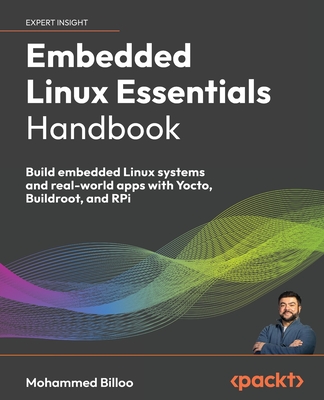
Embedded Linux Essentials Handbook: Build embedded Linux systems and real-world apps with Yocto, Buildroot, and RPi
暫譯: 嵌入式 Linux 基礎手冊:使用 Yocto、Buildroot 和 RPi 建立嵌入式 Linux 系統及實際應用程式
Billoo, Mohammed
- 出版商: Packt Publishing
- 出版日期: 2026-01-30
- 售價: $1,730
- 貴賓價: 9.5 折 $1,643
- 語言: 英文
- 頁數: 450
- 裝訂: Quality Paper - also called trade paper
- ISBN: 1835469302
- ISBN-13: 9781835469309
-
相關分類:
ARM
海外代購書籍(需單獨結帳)
相關主題

商品描述
Get a complete overview of Embedded Linux, from the Kernel to Qt, and work through hands-on examples to build, simulate, and deploy real-world systems on Raspberry Pi 5
Key Features:
- Learn by coding with real examples on Raspberry Pi 5 and QEMU (for those who don't have access to hardware)
- Get introduced to Rust and see how it fits within an embedded Linux system
- Use Qt, a modern GUI framework, to create applications like a scientific instrument with live temperature sensor data
- Purchase of the print or Kindle book includes a free PDF eBook
Book Description:
Embedded Linux now powers everything from IoT devices to industrial systems, making it essential for embedded software engineers to be skilled at customizing, deploying, and developing for these platforms. This hands-on guide walks you through the core concepts of Embedded Linux using practical, real-world examples on Raspberry Pi 4 and 5. For those without access to hardware, it also demonstrates how to simulate embedded Linux systems using QEMU.
This book contains code samples that you can follow along and build three real-world projects: a Python web-based dashboard that retrieves and displays data from a temperature sensor and two GUI applications demonstrating how to use the Qt framework on Embedded Linux using two different development paradigms. You'll also step into advanced territory with Linux kernel debugging techniques and discover how to harness eBPF, building the experience employers want and the confidence to tackle complex embedded challenges.
By the end of this book, you'll have a solid grasp of Embedded Linux development and the skills to build and deploy production-ready, modern embedded applications.
What You Will Learn:
- Understand the architecture, components, and use cases of embedded Linux systems
- Debug and secure the Linux kernel and modern tools like eBPF
- Build custom embedded Linux images using Yocto and Buildroot
- Simulate custom embedded Linux images using QEMU
- Flash, boot, and validate images on Raspberry Pi hardware
- Develop, deploy, and debug applications using C/C++, Python, and Qt
- Automate image and application builds with Docker and GitHub Actions
- Apply your skills through hands-on projects such as web interfaces and complex GUI-based instruments
Who this book is for:
This book is for beginner to intermediate embedded systems engineers, software developers, and enthusiasts seeking hands-on experience with Embedded Linux. It's ideal for those eager to build real-world projects using accessible hardware like the Raspberry Pi.
To get the most out of this book, you should understand basic embedded systems concepts, be comfortable writing simple programs in C, C++, or Python, and feel confident using the terminal and working with basic hardware.
Table of Contents
- Exploring Embedded Linux Architecture and Its Use Cases
- Navigating the Linux Kernel
- Describing Hardware Using the Devicetree
- Debugging The Linux Kernel
- Securing Code Execution with eBPF
- Exploring Frameworks to Build an Image
- Building an Image Using the Yocto Project
- Building an Image Using Buildroot
- Flashing and Testing an Image
- Debugging Build Issues
- Building, Debugging, and Launching Applications on Startup
- Project 1: Using Python to Build a Web Server to Display Sensor Data
- Project 2: Using Qt to Build a Scientific Instrument
- Project 3: Using Qt to Build a Medical Device
- Implementing Continuous Integration/Continuous Delivery (CI/CD)
- Applying Best Practices and Looking into the Future
商品描述(中文翻譯)
取得嵌入式 Linux 的完整概述,從核心到 Qt,並通過實作範例來構建、模擬和部署在 Raspberry Pi 5 上的實際系統
主要特點:
- 通過在 Raspberry Pi 5 和 QEMU 上編碼的實際範例來學習(對於沒有硬體的人)
- 介紹 Rust 並了解它在嵌入式 Linux 系統中的應用
- 使用 Qt 這個現代 GUI 框架來創建應用程式,例如顯示實時溫度感測器數據的科學儀器
- 購買印刷版或 Kindle 書籍可獲得免費 PDF 電子書
書籍描述:
嵌入式 Linux 現在驅動著從物聯網設備到工業系統的一切,這使得嵌入式軟體工程師必須具備定制、部署和開發這些平台的技能。本實作指南通過在 Raspberry Pi 4 和 5 上的實際範例,帶您了解嵌入式 Linux 的核心概念。對於沒有硬體的人,書中還展示了如何使用 QEMU 模擬嵌入式 Linux 系統。
本書包含可供您跟隨的程式碼範例,並構建三個實際項目:一個基於 Python 的網頁儀表板,從溫度感測器檢索並顯示數據,以及兩個展示如何在嵌入式 Linux 上使用 Qt 框架的 GUI 應用程式,採用兩種不同的開發範式。您還將進入進階領域,學習 Linux 核心調試技術,並發現如何利用 eBPF,建立雇主所需的經驗和應對複雜嵌入式挑戰的信心。
在本書結束時,您將對嵌入式 Linux 開發有堅實的掌握,並具備構建和部署生產就緒的現代嵌入式應用程式的技能。
您將學到的內容:
- 理解嵌入式 Linux 系統的架構、組件和使用案例
- 調試和保護 Linux 核心及現代工具如 eBPF
- 使用 Yocto 和 Buildroot 構建自定義嵌入式 Linux 映像
- 使用 QEMU 模擬自定義嵌入式 Linux 映像
- 在 Raspberry Pi 硬體上閃存、啟動和驗證映像
- 使用 C/C++、Python 和 Qt 開發、部署和調試應用程式
- 使用 Docker 和 GitHub Actions 自動化映像和應用程式的構建
- 通過實作項目如網頁介面和複雜的 GUI 基於儀器來應用您的技能
本書適合對象:
本書適合初學者到中級的嵌入式系統工程師、軟體開發人員和尋求嵌入式 Linux 實作經驗的愛好者。非常適合那些渴望使用 Raspberry Pi 等可獲得硬體構建實際項目的人。
為了充分利用本書,您應該理解基本的嵌入式系統概念,能夠舒適地使用 C、C++ 或 Python 編寫簡單程式,並對使用終端和處理基本硬體感到自信。
目錄:
- 探索嵌入式 Linux 架構及其使用案例
- 瀏覽 Linux 核心
- 使用設備樹描述硬體
- 調試 Linux 核心
- 使用 eBPF 保護代碼執行
- 探索構建映像的框架
- 使用 Yocto Project 構建映像
- 使用 Buildroot 構建映像
- 閃存和測試映像
- 調試構建問題
- 在啟動時構建、調試和啟動應用程式
- 項目 1:使用 Python 構建顯示感測器數據的網頁伺服器
- 項目 2:使用 Qt 構建科學儀器
- 項目 3:使用 Qt 構建醫療設備
- 實施持續集成/持續交付 (CI/CD)
- 應用最佳實踐並展望未來


