商品描述
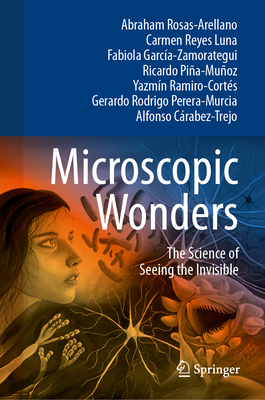
This book takes the reader on a visual journey of the microscope and shares exciting stories about its development and the new technologies that exist that renders the invisible visible. The book begins with the history of microscopy and follows with the basics of various types of microscopy: brightfield, widefield, confocal, transmission electron, and scanning electron. All chapters feature stunning visuals. The history of the microscope is illustrated with paintings in the style of tattoos by tattoo artist Yingfayang tattoo, and the later chapters pair computer designed images and photography to stunning effect, passing on to the reader an appreciation not only for the scientific possibilities of microscopy, but also its artistic possibilities.
商品描述(中文翻譯)
這本書帶領讀者進入顯微鏡的視覺之旅,並分享其發展過程中的精彩故事以及使不可見的事物變得可見的新技術。書中首先介紹顯微鏡的歷史,接著講解各種顯微鏡的基本知識:明場顯微鏡、廣場顯微鏡、共聚焦顯微鏡、透射電子顯微鏡和掃描電子顯微鏡。所有章節都配有驚人的視覺效果。顯微鏡的歷史以刺青藝術家Yingfayang的刺青風格畫作來呈現,而後面的章節則結合了電腦設計的圖像和攝影,效果驚人,不僅讓讀者欣賞到顯微鏡的科學可能性,還展現了其藝術潛力。
作者簡介
Abraham Rosas-Arellano, Ph.D. Ph.D. in Biomedical Sciences from Neurobiology Institute of the National Autonomous University of Mexico (UNAM). He has two Bachelor degrees, one of them in Biology and the other one in OB-Gyn Nursing, as well as a Master degree in Science, all of which were completed at UNAM. During his career he received an extense and comprehensive training in techniques and methodologies focused on fluorescent and electron microscopy. He has been awarded various scholarships from CONAHCYT, AMUHJ, and from The Society for Neuroscience. He is a member of the National System of Researchers in Mexico. He completed his postdoctoral research at the Marine Biological Laboratory in Woods Hole Massachusetts (USA), Cinvestav-IPN in Zacatenco (Mexico City, Mexico), and at the Universidad Austral de Chile in Isla Teja (Chile). Additionally, he's carried research stays at the synchrotrons of Stanford (SLAC National Accelerator Laboratory) and in Paris (Synchrotron Soleil, Paris-Saclay). Currently, he is part of the Imaging Unit staff at the Institute of Cellular Physiology at UNAM as specialist in brightfield, widefield, confocal, transmission electron, and scanning electron microscopy. He has been invited as a guest professor to teach specialized theoretical and practical microscopy courses both in and outside of Mexico. Carmen Reyes Luna, MSc. Carmen was born and raised in Mexico City. She obtained a Bachelor of Science degree in Pharmacology and a Master of Science degree with Distinction in Precision Medicine at The University of Manchester (United Kingdom), same institution where she obtained "The Stellify Award" for volunteering, leadership, and ethical roles. She participated in her first research project with Dr. Ayse Latif, investigating monocarboxylate transporters in endometrial cancer. After her graduate studies Carmen returned to Mexico City with the intention of developing her research skills in neuroscience. She became part of the laboratory of Dr. Ramiro-Cortes at Institute of Cellular Physiology of the National Autonomous University of Mexico where she got involved in the study of network and engram aberrations present in animal models of Phelan-McDermid Syndrome. Currently, Carmen works as a scientist for Metsera in London, dealing with experimental treatments for diabetes and obesity. Her personal research interests, galvanized by being awarded a Psychedelic Science 2023 scholarship, include mental health and disease, neuroplasticity, and neurodegeneration. Fabiola García Zamorategui, Pharmacobiologist chemist and Artist Mexican Pharmacobiological Chemist and Artist dedicated to body tattooing since 2014, specializing in "Black & Grey Realism," sacred geometry with dotwork, and "Blackwork". She has built her career in studios such as "Studio Honour & Pride," "Mala Sangre Tattoo Crew," "Red Cloud Mavericks Tattoo Studio," "Alacrania," "Arcadia," "Red," "Cloud Mavericks," "Diabolink," and currently at "3 Seis Tattoo & Art Collective," where she is known as Yinfayang Tattoo or Fabiola Zamorategui. She creates paintings using the "Chinese ink wash" technique and sculptures using papier-mâché, mouldable dough, and clay techniques. Recently, she has begun working as a book illustrator for various genres. Ricardo Piña Muñoz, Ph.D. He is a Ph.D. in Sciences with a specialization in Molecular Biology, Cellular Biology, and Neurosciences from the University of Chile. He completed a postdoctoral fellowship in Neurosciences at the University of Santiago de Chile and a postdoctoral internship at the University of Erlangen-Nuremberg (Germany). He is currently a titular Professor in the Department of Biology at the Metropolitan University of Educational Sciences located in the commune of Ñuñoa, Chile, where he engages in teaching and research activities. His research focuses on topics related to cellular biology and neurophysiology in the Central and Peripheral Nervous Systems at the cellular and molecular levels. Alfonso Cárabez Trejo, M.D., Ph.D. Medical surgeon from the School of Medicine at National Autonomous University of Mexico (UNAM). He holds a Ph.D. with a specialization in Biochemistry from the Faculty of Chemistry at UNAM. His various academic positions at the School of Medicine at UNAM include Laboratory Instructor in Biochemistry, Teaching Assistant, Adjunct Professor, Associate Professor, Course Lecturer, and main/titular Professor. Additionally, he served as a Principal Investigator at UNAM in the Department of Experimental Biology at the Institute of Biology, Institute of Cellular Physiology (IFC), and later at the Department of Developmental Neurobiology and Neurophysiology at the Institute of Neurobiology (INB), Campus Juriquilla. Internationally, he was Associate Researcher at the Johns Hopkins School of Medicine, Research Assistant at Cornell University's Division of Biological Sciences, and Visiting Professor at the University of Tennessee. His research focused on bioenergetics, particularly mitochondrial ATPase, and micromorphology. For this, he relied on transmission electron microscopy and scanning electron microscopy. He was instrumental in excellency trainings of electron microscopy and in the establishment of microscopy units in Mexico, including the Electron Microscopy Unit at Cinvestav Irapuato, Microscopy Unit at INB - UNAM, and the Imaging Unit at IFC - UNAM. He is now retired. Yazmín Ramiro Cortés, Ph.D. Researcher at the Institute of Cellular Physiology of the National Autonomous University of Mexico (UNAM) and is currently a member of the National System of Researchers. She studied Biology at the Meritorious Autonomous University of Puebla (BUAP) and then moved to Mexico City to pursue a Ph.D. in Biomedical Sciences at the Institute of Cellular Physiology, UNAM. She subsequently completed a postdoctoral stay at the Gulbenkian Institute of Science at the Champalimaud Foundation in Portugal in the laboratory of Dr. Inbal Israely. In 2014 she joined the Institute of Cellular Physiology at UNAM, where she is a researcher and is also in charge of providing the service for the use and management of the two-photon excitation microscope. In her laboratory, the neural bases of autism spectrum disorder are studied in murine models, through the analysis of neuronal activity in vivo and the study of morphological changes of individual synapses and dendritic spines, as well as synaptic plasticity and neuronal activity related to learning. Gerardo Perera-Murcia, MSc. Biologist who graduated from the Faculty of Sciences at the National Autonomous University of Mexico (UNAM). He also completed his master's degree and is currently finishing his doctorate, both master's and Ph.D. degrees under supervision of Dr. Ramiro-Cortes at Institute of Cellular Physiology of the UNAM. His research is focused on analyzing changes in synaptic integration processes in models of autism at the Institute of Cellular Physiology with Dr. Yazmín Ramiro, who works on structural synaptic plasticity and neuronal activity in the visual cortex. Currently, he is an academic technician at the laboratory of Dr. Julio Moran, who studies neuronal death mechanisms at the Institute of Cellular Physiology, UNAM. In his spare time, he is a neuroscience lecturer at the Monterrey Institute of Technology and Higher Education, also known as Technological Institute of Monterrey (campus Mexico City). Currently, his research interests include synaptic plasticity, two-photon microscopy, hippocampal physiology, structural plasticity, and neuronal cell death.
作者簡介(中文翻譯)
亞伯拉罕·羅薩斯-阿雷利亞諾 (Abraham Rosas-Arellano), 博士 來自墨西哥國立自治大學 (UNAM) 神經生物學研究所的生物醫學科學博士。他擁有兩個學士學位,一個是生物學,另一個是婦產科護理學,並且在UNAM完成了科學碩士學位。在他的職業生涯中,他接受了廣泛且全面的訓練,專注於螢光顯微鏡和電子顯微鏡的技術和方法。他曾獲得CONACYT、AMUHJ和神經科學學會的各種獎學金。他是墨西哥國家研究系統的成員。他在美國麻薩諸塞州伍茲霍爾的海洋生物實驗室、墨西哥城的Cinvestav-IPN以及智利的奧斯特拉爾大學完成了博士後研究。此外,他還在斯坦福的同步輻射 (SLAC National Accelerator Laboratory) 和巴黎的同步輻射 (Synchrotron Soleil, Paris-Saclay) 進行過研究。當前,他是UNAM細胞生理學研究所影像單位的專家,專精於明場、廣域、共聚焦、透射電子和掃描電子顯微鏡。他曾受邀擔任客座教授,在墨西哥及其他地區教授專業的理論和實踐顯微鏡課程。 卡門·雷耶斯·盧納 (Carmen Reyes Luna), 碩士 卡門在墨西哥城出生和長大。她在曼徹斯特大學 (英國) 獲得藥理學學士學位和優異的精準醫學碩士學位,並在該校獲得「Stellify獎」,以表彰她在志願服務、領導和倫理角色方面的貢獻。她與Ayse Latif博士參與了她的第一個研究項目,研究子宮內膜癌中的單羧酸轉運蛋白。研究生畢業後,卡門回到墨西哥城,旨在發展她在神經科學方面的研究技能。她成為UNAM細胞生理學研究所Ramiro-Cortes博士實驗室的一員,參與研究Phelan-McDermid綜合症動物模型中的網絡和記憶痕跡異常。目前,卡門在倫敦的Metsera擔任科學家,專注於糖尿病和肥胖的實驗性治療。她的個人研究興趣受到2023年迷幻科學獎學金的激勵,涵蓋心理健康與疾病、神經可塑性和神經退行性變化。 法比奧拉·加西亞·薩莫拉特基 (Fabiola García Zamorategui), 藥物生物學化學家及藝術家 墨西哥藥物生物學化學家及藝術家,自2014年以來專注於身體紋身,專精於「黑白寫實主義」、「點畫神聖幾何」和「黑色作品」。她在「Studio Honour & Pride」、「Mala Sangre Tattoo Crew」、「Red Cloud Mavericks Tattoo Studio」、「Alacrania」、「Arcadia」、「Red」、「Cloud Mavericks」、「Diabolink」等工作室建立了她的職業生涯,目前在「3 Seis Tattoo & Art Collective」工作,並以Yinfayang Tattoo或法比奧拉·薩莫拉特基的名字聞名。她使用「中國水墨」技術創作畫作,並使用紙漿、可塑性麵團和黏土技術創作雕塑。最近,她開始擔任各類型書籍的插畫師。 里卡多·皮尼亞·穆尼奧斯 (Ricardo Piña Muñoz), 博士 他是智利大學的科學博士,專攻分子生物學、細胞生物學和神經科學。他在智利聖地亞哥大學完成了神經科學的博士後研究,並在德國的埃爾朗根-紐倫堡大學進行了博士後實習。目前,他是智利Ñuñoa的都會教育科學大學生物學系的正教授,從事教學和研究活動。他的研究專注於中央和周邊神經系統的細胞和分子層面的細胞生物學和神經生理學相關主題。 阿方索·卡拉貝斯·特雷霍 (Alfonso Cárabez Trejo), 醫學博士、博士 來自墨西哥國立自治大學 (UNAM) 醫學院的外科醫生。他擁有UNAM化學系的生物化學專業博士學位。他在UNAM醫學院的各種學術職位包括生物化學實驗室講師、教學助理、兼任教授、副教授、課程講師和主要/正教授。此外,他曾在UNAM的生物學實驗部門擔任首席研究員,並在生物學研究所、細胞生理學研究所 (IFC),以及後來在神經生物學研究所 (INB) 的發展神經生物學和神經生理學部門工作。在國際上,他曾擔任約翰霍普金斯醫學院的副研究員、康奈爾大學生物科學部的研究助理,以及田納西大學的客座教授。他的研究專注於生物能學,特別是線粒體ATP酶和微形態學。為此,他依賴透射電子顯微鏡和掃描電子顯微鏡。他在電子顯微鏡的卓越訓練和墨西哥顯微鏡單位的建立中發揮了重要作用,包括Irapuato的電子顯微鏡單位、UNAM的INB顯微鏡單位和UNAM的IFC影像單位。他目前已退休。 雅茲敏·拉米羅·科爾特斯 (Yazmín Ramiro Cortés), 博士 墨西哥國立自治大學 (UNAM) 細胞生理學研究所的研究員,目前是國家研究系統的成員。她在普埃布拉自治大學 (BUAP) 學習生物學,然後移居墨西哥城,在UNAM細胞生理學研究所攻讀生物醫學科學博士學位。隨後,她在葡萄牙Champalimaud基金會的Gulbenkian科學研究所完成了博士後研究,指導教授為Inbal Israely博士。2014年,她加入UNAM細胞生理學研究所,擔任研究員,並負責提供雙光子激發顯微鏡的使用和管理服務。在她的實驗室中,研究自閉症譜系障礙的神經基礎,通過分析小鼠模型中的神經元活動和研究單個突觸及樹突棘的形態變化,以及與學習相關的突觸可塑性和神經元活動。 赫拉爾多·佩雷拉-穆爾西亞 (Gerardo Perera-Murcia), 碩士 他是墨西哥國立自治大學 (UNAM) 科學學院的生物學畢業生。他還完成了碩士學位,並目前正在完成博士學位,碩士和博士學位均在UNAM細胞生理學研究所的Ramiro-Cortes博士指導下進行。他的研究專注於分析自閉症模型中突觸整合過程的變化,與Yazmín Ramiro博士在細胞生理學研究所合作,研究視覺皮層中的結構突觸可塑性和神經元活動。目前,他是UNAM細胞生理學研究所Julio Moran博士實驗室的學術技術人員,該實驗室研究神經元死亡機制。在空閒時間,他是蒙特雷科技大學 (Technological Institute of Monterrey) 的神經科學講師。當前,他的研究興趣包括突觸可塑性、雙光子顯微鏡、海馬生理學、結構可塑性和神經元細胞死亡。