商品描述
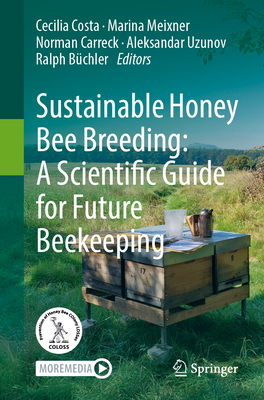
This book is the result of collaborative efforts which have taken place over the past 20 years within the COLOSS network, when the factor "bee origin" was first put into the equation of factors involved in colony losses. It aims to provide beekeepers, apicultural students, and beekeeping enthusiasts with the scientific background necessary to understand these new ideas, so that future beekeeping may be based on existing "local" bee genotypes which can then be improved by selective breeding. The work is divided into two parts. The first section briefly tells the story of honey bees, their origins and their long association with humans, the development of bee breeding and selection and finally the scientific and anecdotal evidence that show that local bees are better for the environment and for beekeeping itself. The second part provides a practical guide to techniques for sustainable bee breeding and selection, ranging from setting up performance testing, to the cost of selection, through methods for rearing queens and making selection decisions, including many aspects related to the control of the very special mating biology of the honey bee. Authored by an expert team of more than 30 scientists, extension specialists and beekeepers from 16 countries around the world, the present synopsis provides all theoretical and practical aspects of honey bee breeding. It is rich in figures and vivid case studies, including hands-on interviews with bee breeders and other stakeholders. Final, a supplementary video can be accessed online as well as directly from the print book; simply download the free Springer Nature More Media App and scan the link in the accompanying figure caption.
商品描述(中文翻譯)
本書是過去20年來在COLOSS網絡內進行的合作努力的結果,當時「蜜蜂來源」這一因素首次被納入蜂群損失的相關因素中。它旨在為養蜂人、養蜂學學生和養蜂愛好者提供必要的科學背景,以理解這些新觀念,從而使未來的養蜂能夠基於現有的「本地」蜜蜂基因型,並通過選擇性繁殖進行改進。
本書分為兩個部分。第一部分簡要講述了蜜蜂的故事、它們的起源及其與人類的長期關聯、蜜蜂繁殖和選擇的發展,最後提供科學和軼事證據,顯示本地蜜蜂對環境和養蜂本身更為有利。第二部分提供了可持續蜜蜂繁殖和選擇技術的實用指南,涵蓋從設置性能測試到選擇成本,再到育王方法和選擇決策的各種方法,包括與蜜蜂獨特交配生物學控制相關的許多方面。
本書由來自16個國家的30多位科學家、推廣專家和養蜂人組成的專家團隊撰寫,提供了蜜蜂繁殖的所有理論和實踐方面。書中充滿了圖表和生動的案例研究,包括與養蜂人及其他利益相關者的實地訪談。最後,讀者可以在線訪問補充視頻,並可直接從印刷書籍中獲取;只需下載免費的Springer Nature More Media App,並掃描附圖說明中的鏈接。
作者簡介
Cecilia Costa has a degree in Agricultural Science and a PhD in Agricultural Biotechnologies. She fell in love with honey bees as a teenager and started her career keeping bees and working in a local beekeepers' association. She then won a position in the bee team of CREA, the Italian Agricultural Research Council, where she has been working for over 20 years, focusing on honey bee breeding and biodiversity of the Italian subspecies Apis mellifera ligustica and Apis mellifera siciliana, with special attention to disease resistance traits, genotype-environment interactions and factors affecting the development and welfare of bee colonies. She is strongly involved in the "COLOSS Assocation for the prevention of honey bee colony losses" and is coordinating an EU Horizon project. Cecilia is author of about 70 scientific publications and a frequent lecturer in beekeeping events. Marina Meixner took up beekeeping when she was a student of biology at the university of Frankfurt. After completing her PhD, she worked as a scientist at the universities of Halle and Frankfurt in Germany, and at Washington State University in the U.S. In 2007 she joined the bee institute in Kirchhain, Germany, as deputy head and became head of institute in 2022. Her research interests are in the fields of honey bee diversity and local adaptation, genetics, and honey bee health and pathology. Her scientific achievements include more than 100 peer-reviewed papers, complemented by numerous technical reports. Since 2008, she serves on the editorial board of the journal Apidologie. She also serves as chair of the bee breeding task force of the international research association COLOSS and as chair of the German Bee Research Association. Norman Carreck has been keeping bees since the age of 15. He read Agricultural Science at Nottingham University and joined Rothamsted Research, United Kingdom, in 1987. Between 1991 and 2006 he was apiculturalist, with responsibility for maintaining about 80 colonies of honey bees and was also fully involved in research on pollination ecology, bee behaviour, bee pathology and forage for bees. Since 2008 he has carried out research at the University of Sussex on bee breeding and pesticides and bees. Between 2007 and 2018 he was Senior Editor of the Journal of Apicultural Research, and between 2009 and 2018 he was Science Director of the International Bee Research Association. He obtained the National Diploma in Beekeeping in 1996, was elected a Fellow of the Royal Entomological Society in 2004, and a Fellow of the Royal Society of Biology in 2011. He is an Independent Science Advisor to the "Bee Health Advisory Forum" for the Defra "Healthy Bees Plan" and is a member of the Executive Committee of the "COLOSS" association. He is joint editor of the Beekeepers Quarterly, a director of Carreck Consultancy Ltd and Bee Publishing Ltd and is an Associate Fellow of the University of Sussex. Aleksandar Uzunov - Started keeping bees in 1995 as a student and completed his PhD in 2013 on the diversity and biology of the Macedonian honey bee A. m. macedonica. He is a Professor and Head of the Laboratory for Honey Bee Biology and Breeding at the Ss. Cyril and Methodius University in Skopje, Macedonia. From 2015 to 2021, he was an external expert at the Bee Institute in Kirchhain, Germany. His main scientific contributions are related to honey bee biology and breeding, mating control, Varroa control and beekeeping management practices. He is the author of over 50 scientific articles, many popular science publications and beekeeping-related books and brochures. Since 2023, he has been a scientific advisor at the Bee Institute (CAAS) in Beijing, China. Alex has been a member of numerous international research projects and initiatives such as COLOSS, RNSBB, SmartBees, EurBeST, BeeConSel, BeeGuards and more. Ralph Büchler - After gaining his PhD on the genetics of varroa resistance at Bonn university he worked as scientist at the bee institute in Kirchhain, Germany. In 1997, he became head of the team and initiated many national and international projects and co-operations (Coloss, Smartbees, EurBeSt, BeeGuards etc.). His main research interests have been in honey bee pathology, genetics and breeding, colony management schemes and the effects of modern agriculture on the bee industry. His work is presented in more than 300 scientific papers and technical reports, several book contributions and films. Ralph is privately keeping bees for more than 50 years, recently running about 25 colonies as a registered queen breeder. After retiring in 2022, he is still active as author, lecturer, project consultant and board member of the breeder association "Arbeitsgemeinschaft Toleranzzucht".
作者簡介(中文翻譯)
Cecilia Costa 擁有農業科學學位及農業生物技術博士學位。她在青少年時期愛上了蜜蜂,並開始了她的養蜂生涯,參與當地的養蜂協會。隨後,她在意大利農業研究委員會(CREA)的蜜蜂團隊中獲得了一個職位,至今已工作超過20年,專注於蜜蜂繁殖及意大利亞種 Apis mellifera ligustica 和 Apis mellifera siciliana 的生物多樣性,特別關注疾病抗性特徵、基因型與環境的互動以及影響蜜蜂群體發展和福祉的因素。她積極參與「COLOSS 蜜蜂群體損失預防協會」,並協調一個歐盟地平線項目。Cecilia 是約70篇科學出版物的作者,並經常在養蜂活動中擔任講者。 Marina Meixner 在法蘭克福大學讀生物學時開始養蜂。完成博士學位後,她在德國哈雷和法蘭克福大學以及美國華盛頓州立大學擔任科學家。2007年,她加入德國基爾希海因的蜜蜂研究所,擔任副所長,並於2022年成為所長。她的研究興趣包括蜜蜂多樣性和地方適應、遺傳學以及蜜蜂健康和病理學。她的科學成就包括超過100篇經過同行評審的論文,並附有多份技術報告。自2008年以來,她擔任《Apidologie》期刊的編輯委員會成員。她還擔任國際研究協會 COLOSS 的蜜蜂繁殖工作組主席,以及德國蜜蜂研究協會的主席。 Norman Carreck 自15歲起開始養蜂。他在諾丁漢大學學習農業科學,並於1987年加入英國的羅瑟姆斯特德研究所。在1991年至2006年間,他擔任養蜂專家,負責維護約80個蜜蜂群體,並全力參與授粉生態學、蜜蜂行為、蜜蜂病理學及蜜蜂飼料的研究。自2008年以來,他在薩塞克斯大學進行蜜蜂繁殖和農藥與蜜蜂的研究。在2007年至2018年間,他擔任《Journal of Apicultural Research》的高級編輯,並在2009年至2018年間擔任國際蜜蜂研究協會的科學主任。他於1996年獲得國家養蜂文憑,2004年當選英國昆蟲學會院士,2011年成為英國生物學會院士。他是英國農業部「健康蜜蜂計劃」的「蜜蜂健康諮詢論壇」獨立科學顧問,並是「COLOSS」協會執行委員會的成員。他是《Beekeepers Quarterly》的共同編輯,Carreck Consultancy Ltd 和 Bee Publishing Ltd 的董事,並是薩塞克斯大學的副研究員。 Aleksandar Uzunov - 1995年作為學生開始養蜂,並於2013年完成有關馬其頓蜜蜂 A. m. macedonica 的多樣性和生物學的博士學位。他是馬其頓斯科普里聖西里爾與聖美多修斯大學蜜蜂生物學與繁殖實驗室的教授及主任。2015年至2021年,他擔任德國基爾希海因蜜蜂研究所的外部專家。他的主要科學貢獻與蜜蜂生物學和繁殖、交配控制、瓦螺控制及養蜂管理實踐有關。他是超過50篇科學文章的作者,並撰寫了許多科普出版物及與養蜂相關的書籍和小冊子。自2023年以來,他在中國北京的蜜蜂研究所(CAAS)擔任科學顧問。Alex 參與了許多國際研究項目和倡議,如 COLOSS、RNSBB、SmartBees、EurBeST、BeeConSel、BeeGuards 等。 Ralph Büchler - 在波恩大學獲得有關瓦螺抗性的遺傳學博士學位後,他在德國基爾希海因的蜜蜂研究所擔任科學家。1997年,他成為團隊負責人,並啟動了許多國內和國際項目及合作(Coloss、Smartbees、EurBeSt、BeeGuards 等)。他的主要研究興趣集中在蜜蜂病理學、遺傳學和繁殖、群體管理方案以及現代農業對蜜蜂產業的影響。他的工作發表在超過300篇科學論文和技術報告中,並有幾本書的貢獻和影片。Ralph 私下養蜂超過50年,最近作為註冊的蜂后繁殖者經營約25個蜜蜂群體。2022年退休後,他仍然活躍於作者、講師、項目顧問及「容忍繁殖工作組」的董事會成員。