商品描述
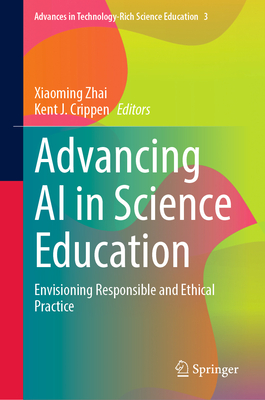
This edited volume offers a timely, domain-specific examination of how artificial intelligence (AI) is reshaping the foundations of science teaching and learning. As AI transforms scientific work, societal expectations, and the skills future citizens need, science education stands at a pivotal crossroads. This book highlights the major shifts AI is driving--redefining educational goals, reshaping classroom procedures, expanding learning materials, enabling dynamic assessment, and altering the competencies students must develop to thrive in an AI-driven world of scientific inquiry and decision-making. Through critical analysis and vivid examples from core scientific practices, the authors reveal AI's dual capacity to enrich and complicate science education. AI offers unprecedented personalization, efficiency, and access to authentic scientific practices, yet also raises concerns around fairness, transparency, privacy, accountability, and the preservation of human judgment. To navigate these tensions, this book introduces the Responsible and Ethical Principles (REP) framework, an action-oriented lens for guiding design, use, and governance that ensures AI advances equity, scientific integrity, and democratic participation. Scholars demonstrate how REP principles inform ethical goals, inclusive materials, trustworthy assessments, and transformative learning outcomes, sometimes constraining as well as enabling AI use as a partner rather than a replacement. Ultimately, Advancing AI in Science Education argues that even as AI reshapes schooling, science education must remain fundamentally human. Empathy, creativity, ethical judgment, and shared meaning-making within scientific communities anchor responsible AI-supported learning and guide an equitable, human-centered future for science education.
商品描述(中文翻譯)
這本編輯過的書籍提供了一個及時且具領域特定的檢視,探討人工智慧(AI)如何重塑科學教學與學習的基礎。隨著AI改變科學工作、社會期望以及未來公民所需的技能,科學教育正處於一個關鍵的十字路口。本書突顯了AI所驅動的主要變革——重新定義教育目標、重塑課堂程序、擴展學習材料、實現動態評估,以及改變學生必須發展的能力,以便在一個以AI為驅動的科學探究與決策世界中茁壯成長。
透過對核心科學實踐的批判性分析和生動的例子,作者揭示了AI在豐富和複雜化科學教育方面的雙重能力。AI提供了前所未有的個性化、效率和對真實科學實踐的訪問,但同時也引發了關於公平性、透明度、隱私、問責制以及人類判斷保留的擔憂。為了應對這些緊張關係,本書介紹了負責任與倫理原則(REP)框架,這是一個以行動為導向的視角,用於指導設計、使用和治理,確保AI促進公平、科學誠信和民主參與。學者們展示了REP原則如何影響倫理目標、包容性材料、可信的評估以及變革性的學習成果,有時限制而非取代AI的使用,將其視為夥伴而非替代品。
最終,推進科學教育中的AI主張,即使AI重塑了學校教育,科學教育仍必須保持根本的人性。共情、創造力、倫理判斷以及科學社群中的共同意義建構,都是負責任的AI支持學習的基石,並指引科學教育朝向公平且以人為本的未來。
作者簡介
Xiaoming Zhai, Associate Professor in Science Education and AI, (courtesy) Associate Professor in Computer Science and in Statistics, serves as Directors of the AI4STEM Education Center and the National GENIUS Center at University of Georgia, USA. His research pioneers the use of AI to transform STEM education. He has published widely, serves as guest editor of various journals, chaired the 2022 and 2025 AI in STEM education conferences, and co-founds and -leads NARST's RAISE group. He edited Uses of Artificial Intelligence in STEM Education (Oxford, 2024) and Artificial Intelligence in STEM Education Research (Springer, 2026). Dr. Zhai is a leading voice in shaping the future of AI for STEM education. Kent J. Crippen, Professor of STEM Education at University of Florida, USA. His research advances a resilient STEM workforce by designing environments that immerse students in authentic science and engineering practices. The Crippen Research Group investigates learning and participation across interdisciplinary contexts, including extended reality, AI and data science, engineering design, and molecular modeling. With strong funding and national honors, including as AAAS Fellow, Crippen's scholarship emphasizes innovation, integrity, impact, and teamwork. He serves as Editor-in-Chief of the Journal of Science Education and Technology, founding editor of the Advances in Technology-Rich Science Education book series, and co-leads NARST's RAISE RIG.
作者簡介(中文翻譯)
賴小明(Xiaoming Zhai),美國喬治亞大學(University of Georgia)科學教育與人工智慧(AI)副教授(兼任)及計算機科學與統計學副教授,擔任AI4STEM教育中心及全國天才中心的主任。他的研究開創了利用人工智慧轉變STEM教育的先河。他的著作廣泛,擔任多本期刊的客座編輯,主持2022年及2025年STEM教育中的人工智慧會議,並共同創立及領導NARST的RAISE小組。他編輯了《Uses of Artificial Intelligence in STEM Education》(牛津大學出版社,2024年)及《Artificial Intelligence in STEM Education Research》(施普林格,2026年)。賴博士是塑造STEM教育未來人工智慧的重要聲音。
肯特·J·克里彭(Kent J. Crippen),美國佛羅里達大學(University of Florida)STEM教育教授。他的研究透過設計沉浸式環境,促進堅韌的STEM勞動力,讓學生參與真實的科學與工程實踐。克里彭研究小組調查跨學科背景下的學習與參與,包括擴增實境、人工智慧與數據科學、工程設計及分子建模。克里彭擁有強大的資金支持及國家榮譽,包括美國科學促進會(AAAS)會士,他的學術研究強調創新、誠信、影響力及團隊合作。他擔任《Journal of Science Education and Technology》的主編、《Advances in Technology-Rich Science Education》書系的創始編輯,並共同領導NARST的RAISE RIG。