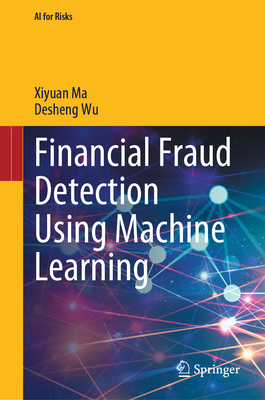
Financial Fraud Detection Using Machine Learning
暫譯: 使用機器學習的金融詐騙檢測
Ma, Xiyuan, Wu, Desheng
- 出版商: Springer
- 出版日期: 2025-10-04
- 售價: $7,070
- 貴賓價: 9.5 折 $6,716
- 語言: 英文
- 頁數: 212
- 裝訂: Hardcover - also called cloth, retail trade, or trade
- ISBN: 9819508398
- ISBN-13: 9789819508396
-
相關分類:
Machine Learning、Fintech
海外代購書籍(需單獨結帳)
商品描述
This book serves as a comprehensive guide to learning various aspects of financial fraud, encompassing the related research, the current situation, potential causes, implementation process, detection methods, regulatory penalties and management challenges in publicly listed companies. In this book, readers learn about the fraudulent practices that may occur in corporate operations, the executing mechanisms, an identifying indicators framework, and diverse detection methods including qualitative and quantitative models. Quantitative models include discriminant analysis, econometric analysis, and machine learning (ML) models. This book highlights the application of ML algorithms to detect financial fraud detection and discusses their limitations, such as high false-positive costs, delayed detection, the demand for interdisciplinary expertise, dependency on specific application scenarios, and issues with fraud data quality. Each related chapter provides a structured overview of the problems addressed, the algorithms used, experimental result and comparisons. Additionally, this book examines the cost-benefit trade-offs faced by companies engaging in financial fraud, considering factors such as ethical dilemmas, opportunities, practical needs, exposure risks, and litigation costs. This book is written for financial regulation institutions, business leaders, auditors, academics, and anyone interested in financial fraud detection. It offers practical insights into effectively preventing and controlling financial fraud and an overview of the latest advancements in ML technologies. Through real-world case studies, readers will gain a deeper understanding of the financial fraud, how ML can be used to detect it, as well as its pitfalls and limitations. Overall, this book bridges the gap between theory and application, equipping readers to understand how to detect financial fraud with the power of accounting and ML in the modern business environment.
商品描述(中文翻譯)
本書作為學習金融詐欺各個方面的綜合指南,涵蓋相關研究、當前狀況、潛在原因、實施過程、檢測方法、監管處罰以及上市公司面臨的管理挑戰。在本書中,讀者將了解可能在企業運營中發生的詐欺行為、執行機制、識別指標框架,以及包括定性和定量模型在內的多種檢測方法。定量模型包括判別分析、計量經濟學分析和機器學習(ML)模型。本書強調了機器學習算法在金融詐欺檢測中的應用,並討論了其局限性,例如高誤報成本、檢測延遲、對跨學科專業知識的需求、依賴特定應用場景以及詐欺數據質量問題。每個相關章節提供了所解決問題的結構化概述、所使用的算法、實驗結果和比較。此外,本書還探討了從事金融詐欺的公司所面臨的成本效益權衡,考慮了道德困境、機會、實際需求、風險暴露和訴訟成本等因素。本書是為金融監管機構、商業領袖、審計師、學者以及任何對金融詐欺檢測感興趣的人士而寫,提供了有效預防和控制金融詐欺的實用見解,以及機器學習技術的最新進展概述。通過真實案例研究,讀者將深入了解金融詐欺、機器學習如何用於檢測詐欺,以及其陷阱和局限性。總體而言,本書彌合了理論與應用之間的鴻溝,使讀者能夠理解如何在現代商業環境中利用會計和機器學習的力量來檢測金融詐欺。
作者簡介
Xiyuan Ma is a Postdoctoral Fellow in at the Institutes of Science and Development, Chinese Academy of Sciences. She has published multiple papers in journals such as Decision Support Systems and China Journal of Econometrics, with research interests in financial fraud, financial risk management, and government fund management.
Desheng Wu is a Distinguished Professor at the University of Chinese Academy of Sciences and a Professor at Stockholm University. He has published over 150 papers in journals such as Production and Operations Management, Decision Sciences, and Risk Analysis. With research interests in risk management and intelligent decision-making, he is a member of prestigious academic institutions including Academia Europaea and the European Academy of Sciences and Arts. Prof. Wu has received several notable awards and serves as an editor for various journals, including Risk Analysis and IEEE Transactions on Systems, Man, and Cybernetics.
作者簡介(中文翻譯)
馬西媛是中國科學院科學與發展研究所的博士後研究員。她在《決策支持系統》和《中國計量經濟學期刊》等期刊上發表了多篇論文,研究興趣包括金融詐騙、金融風險管理和政府資金管理。
吳德生是中國科學院大學的特聘教授及斯德哥爾摩大學的教授。他在《生產與運營管理》、《決策科學》和《風險分析》等期刊上發表了超過150篇論文。吳教授的研究興趣包括風險管理和智能決策,他是歐洲學術機構(Academia Europaea)和歐洲科學與藝術學院的成員。吳教授獲得了多項重要獎項,並擔任多個期刊的編輯,包括《風險分析》和《IEEE系統、人類與控制論學報》。