商品描述
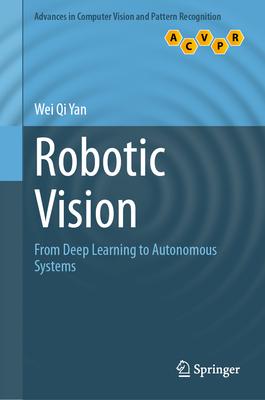
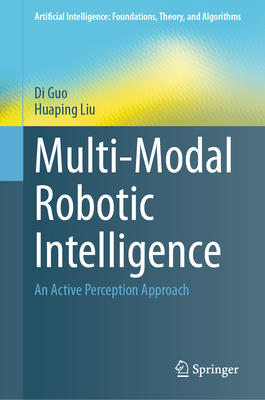
Robotic vision represents the cutting edge of modern computing, combining artificial intelligence, deep learning, and advanced robotics to enable intelligent machines. As universities worldwide pivot from conventional machine learning to robotic vision, this book serves as an essential guide for researchers, educators, and students entering this transformative field. This comprehensive resource introduces core topics such as humanoid and arm-type robots, robotic image processing, stereo vision, 3D reconstruction, scene understanding, and vision-based control. Advanced algorithms, including Kalman filters, imitation learning, inverse reinforcement learning, diffusion transformers, and multimodal approaches, are explored in depth. Practical applications are seamlessly integrated with theoretical knowledge, offering lab-based exercises and discussions to enhance hands-on learning. Readers will gain unique insights into robotic navigation and planning, visual servoing, federated learning, and cutting-edge techniques like the "third eye algorithm" and camera retreat. Designed for accessibility, the book assumes no prerequisites beyond foundational courses in machine learning and deep learning, making it suitable for diverse audiences. With its structured learning approach and emphasis on both foundational principles and emerging innovations, this book is an indispensable tool for mastering robotic vision. Whether readers aim to advance research, develop autonomous systems, or integrate AI-driven robotics into real-world applications, this book provides the knowledge and skills to succeed.
商品描述(中文翻譯)
機器人視覺代表了現代計算的前沿,結合了人工智慧、深度學習和先進的機器人技術,使智能機器得以實現。隨著全球大學從傳統的機器學習轉向機器人視覺,本書成為進入這一變革性領域的研究人員、教育工作者和學生的重要指南。
這本全面的資源介紹了核心主題,如人形機器人和臂型機器人、機器人影像處理、立體視覺、3D重建、場景理解和基於視覺的控制。深入探討了包括卡爾曼濾波器(Kalman filters)、模仿學習(imitation learning)、反向強化學習(inverse reinforcement learning)、擴散變壓器(diffusion transformers)和多模態方法(multimodal approaches)等先進演算法。實際應用與理論知識無縫整合,提供基於實驗室的練習和討論,以增強實作學習。
讀者將獲得有關機器人導航和規劃、視覺伺服(visual servoing)、聯邦學習(federated learning)以及前沿技術如「第三隻眼演算法」(third eye algorithm)和相機撤退(camera retreat)的獨特見解。本書設計上考慮到可及性,假設讀者只需具備機器學習和深度學習的基礎課程,適合各種讀者群體。
憑藉其結構化的學習方法和對基礎原則及新興創新的重視,本書是掌握機器人視覺的不可或缺的工具。無論讀者旨在推進研究、開發自主系統,還是將人工智慧驅動的機器人技術整合到現實應用中,本書都提供了成功所需的知識和技能。
作者簡介
Wei Qi Yan is with the Department of Computer and Information Sciences at the Auckland University of Technology (AUT), New Zealand. His expertise covers robotics, deep learning, machine intelligence, computer vision, and multimedia computing. Dr. Yan is an associate editor of ACM Transactions on Multimedia Computing, Communications and Applications, a senior area editor of IEEE Signal Processing Letters, a section editor of Springer journal Discover Artificial Intelligence (AI). Dr. Yan has worked as an exchange computer scientist between the Royal Society Te Apārangi (RSNZ) and the Chinese Academy of Sciences (CAS) in China. Dr. Yan is the director of joint research laboratory with the Shandong Academy of Sciences (SDAS) Shandong China, the director of the joint laboratory with China Jiliang University (CJLU), Zhejiang China. Dr. Yan is recognized as one of the "Top Two Percent of Scientists in the World," he currently holds the position of Chair of ACM Multimedia Chapter of New Zealand, and he is a Fellow of Engineering New Zealand (FEngNZ).
作者簡介(中文翻譯)
顏偉奇目前任職於紐西蘭奧克蘭科技大學(AUT)計算機與資訊科學系。他的專業領域包括機器人技術、深度學習、機器智能、計算機視覺及多媒體計算。顏博士是《ACM多媒體計算、通信與應用期刊》(ACM Transactions on Multimedia Computing, Communications and Applications)的副編輯、《IEEE信號處理快報》(IEEE Signal Processing Letters)的高級區域編輯,以及施普林格期刊《發現人工智慧》(Discover Artificial Intelligence)的版塊編輯。顏博士曾擔任皇家學會Te Apārangi(RSNZ)與中國科學院(CAS)之間的交流計算機科學家。顏博士是與中國山東省山東省科學院(SDAS)共同研究實驗室的主任,並且是與中國計量大學(CJLU)浙江的聯合實驗室主任。顏博士被認可為「全球前二百分之一的科學家」,目前擔任紐西蘭ACM多媒體分會的主席,並且是紐西蘭工程師協會(FEngNZ)的院士。