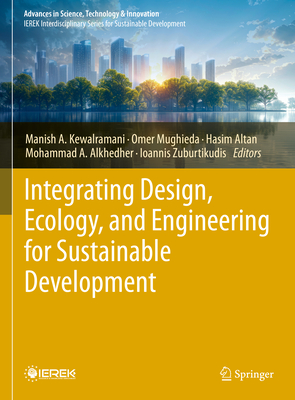
Integrating Design, Ecology, and Engineering for Sustainable Development
暫譯: 整合設計、生態與工程以實現可持續發展
A. Kewalramani, Manish, Mughieda, Omer, Altan, Hasim
相關主題

商品描述
This book brings together a multidisciplinary collection of research that highlights innovative approaches to creating more sustainable, resilient, and inclusive environments. This volume addresses the urgent need to integrate ecological principles, technological advancements, and community-centered design in shaping the built environment. The contributions span a wide range of topics, including sustainable urbanism and inclusive city design, with a focus on climate adaptation, aging societies, and public space connectivity. Cultural heritage and community landscapes are explored through the lens of traditional architecture, urban morphology, and revitalization strategies. Advances in environmental technologies and renewable energy solutions are presented through studies on solar applications, PV-integrated designs, and energy-efficient systems. Water systems and blue-green infrastructure are examined in the context of arid urban environments and sustainable water harvesting. In the field of construction, the book explores circular economy practices, waste management, and sustainable materials. It also explores smart design and biophilic innovation, emphasizing the role of digital architecture and agile methodologies. Finally, it highlights environmental health and microbiological systems, investigating indoor air quality, material performance, and microbial ecology. This comprehensive volume serves as a valuable reference for researchers, practitioners, and policymakers committed to sustainable development through the integration of design, ecology, and engineering.
商品描述(中文翻譯)
本書匯集了一系列跨學科的研究,突顯了創造更可持續、韌性和包容性環境的創新方法。本卷針對迫切需要將生態原則、技術進步和以社區為中心的設計整合於建成環境的需求進行探討。這些貢獻涵蓋了廣泛的主題,包括可持續城市主義和包容性城市設計,重點關注氣候適應、老齡化社會和公共空間的連通性。文化遺產和社區景觀則透過傳統建築、城市形態學和振興策略的視角進行探討。環境技術和可再生能源解決方案的進展,通過對太陽能應用、光伏整合設計和能源效率系統的研究來呈現。水系統和藍綠基礎設施在乾旱城市環境和可持續水資源收集的背景下進行檢視。在建築領域,本書探討了循環經濟實踐、廢物管理和可持續材料。它還探討了智能設計和生物親和創新,強調數位建築和敏捷方法論的角色。最後,本書突顯了環境健康和微生物系統,調查室內空氣質量、材料性能和微生物生態學。這本綜合性著作為致力於通過設計、生態和工程整合來實現可持續發展的研究人員、實務工作者和政策制定者提供了寶貴的參考。