商品描述
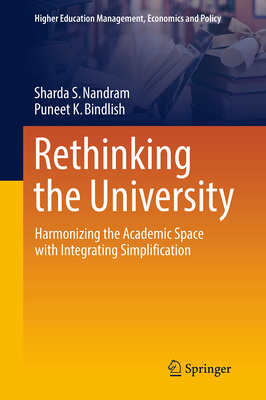
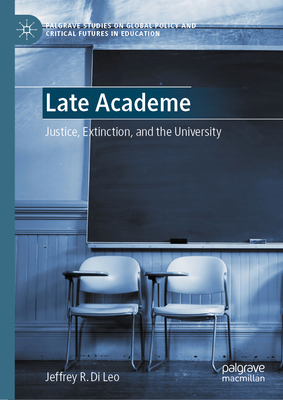
This book offers an empirically informed and philosophically grounded reimagining of the university in the 21st century. Confronted with polycrises, geopolitical tensions, student activism, academic freedom disputes, and growing Epistemic Asymmetry, the book examines the deeper tensions shaping contemporary higher education.
Drawing on global academic interviews, Strategic Foresight-In workshops, and student dialogues, the authors analyze conditions of Strategic Drift and institutional misalignment between the university's epistemic and democratic commitments. The book reflects on the university's responsibility to steward knowledge with integrity, pluralism, and care.
Through innovative metaphors, including the forest farm and the spinning top, the university is reimagined as a dynamic knowledge ecosystem capable of cultivating both short- and long-term inquiry, with disruptive science as its distinctive mandate. The design philosophy of Integrating Simplification provides a framework for harmonizing epistemic, ethical, and operational dimensions.
Bridging higher education management, governance, and organizational design, this book offers a clear pathway for renewing the university's coherence, academic freedom, and societal responsibility.
商品描述(中文翻譯)
本書提供了一個以實證為基礎且具哲學根基的21世紀大學重新想像。面對多重危機、地緣政治緊張、學生運動、學術自由爭議以及日益增長的知識不對稱,本書探討了塑造當代高等教育的深層緊張關係。
透過全球學術訪談、戰略前瞻工作坊及學生對話,作者分析了大學在知識與民主承諾之間的戰略漂移和機構不對齊的情況。本書反思了大學在誠信、多元和關懷下管理知識的責任。
通過創新的隱喻,包括森林農場和陀螺,大學被重新想像為一個動態的知識生態系統,能夠培養短期和長期的探究,以顛覆性科學作為其獨特的使命。整合簡化的設計哲學提供了一個框架,以協調知識、倫理和操作層面的維度。
本書橋接高等教育管理、治理和組織設計,為更新大學的內聚性、學術自由和社會責任提供了一條清晰的道路。
作者簡介
Sharda S. Nadram is Professor of Business & Spirituality at Nyenrode Business University and Professor of Hindu Spirituality and Society at the School of Religion and Theology, Faculty of Social Sciences and Humanities, Vrije Universiteit Amsterdam, where she also serves as Chief Diversity Officer. She serves as Adjunct Professor in Banasthali Vidyapith, India. In addition she is member of the steering committee of the European Spirituality in Economics and Society (SPES), member of the Leadership Team of the Management, Spirituality and Religion Division in the Academy of Management, associate editor of the Journal of Management, Spirituality and Religion. With a background in psychology and economics, she earned her PhD in social psychology and has pioneered the integration of spirituality into business, leadership, and entrepreneurship. She is the author of several books, including The Spirit of Entrepreneurship and Organizational Innovation by Integrating Simplification. Her research focuses on Organizational Innovation, Spirituality and Management, Integrative Intelligence, Intuitive Decision-Making, and Spiritual Values in professional settings. Her work spans multiple sectors, promoting inclusive, conscious leadership and sustainable innovation. Deeply rooted in her Indian heritage and Surinamese upbringing, Sharda bridges Eastern philosophy with Western organizational practices to inspire meaningful transformation in institutions. Her scholarship offers a visionary yet practical approach to modern leadership and organizational change.
Puneet K. Bindlish is with the School of Religion and Theology, Faculty of Social Sciences and Humanities, Vrije Universiteit Amsterdam. His interdisciplinary research bridges Hindu spirituality, Indian epistemology, and Indigenous knowledge systems with contemporary ethical, theological, and organizational thought. Specializing in dharma-centric frameworks, his work explores spiritual care, Hindu ethics, and philosophical hermeneutics in pluralistic societies. He engages with non-translatable concepts to reveal their deeper ethical and ontological significance, offering alternatives to dominant Western categories. His scholarship contributes to evolving discourses on spirituality, relational ethics, and leadership in complex global contexts. He also brings prior experience in consulting and organizational research, particularly in areas such as integrative intelligence, self-managed organizations, and the philosophy of management. At VU Amsterdam, he supports the university's commitment to epistemic diversity and inclusion by fostering cross-cultural dialogue and reimagining academic inquiry through indigenous and integrative lenses.
作者簡介(中文翻譯)
Sharda S. Nadram 是奈恩羅德商學院的商業與靈性教授,以及阿姆斯特丹自由大學社會科學與人文學院宗教與神學學院的印度教靈性與社會教授,並擔任首席多樣性官。她同時擔任印度巴納斯塔利維迪亞比特的兼任教授。此外,她是歐洲經濟與社會靈性(SPES)指導委員會的成員,也是管理學院管理、靈性與宗教部門的領導團隊成員,並擔任《管理、靈性與宗教期刊》的副編輯。她擁有心理學和經濟學的背景,獲得社會心理學博士學位,並在商業、領導力和創業中開創了靈性整合的先河。她著有多本書籍,包括《通過整合簡化來實現創業精神與組織創新》。她的研究重點在於組織創新、靈性與管理、整合智慧、直覺決策以及專業環境中的靈性價值。她的工作涵蓋多個領域,促進包容性、意識型領導和可持續創新。深深植根於她的印度傳承和蘇里南成長背景,Sharda 將東方哲學與西方組織實踐相結合,以啟發機構內有意義的轉變。她的學術研究提供了一種前瞻性但實用的現代領導力和組織變革方法。
Puneet K. Bindlish 目前在阿姆斯特丹自由大學社會科學與人文學院的宗教與神學學院任職。他的跨學科研究將印度教靈性、印度認識論和原住民知識體系與當代倫理、神學和組織思想相結合。專注於以法(dharma)為中心的框架,他的工作探討了靈性關懷、印度教倫理和多元社會中的哲學詮釋學。他與不可翻譯的概念互動,以揭示其更深層的倫理和本體論意義,並提供對主流西方類別的替代方案。他的學術研究對於在複雜的全球背景下發展靈性、關係倫理和領導力的話語做出了貢獻。他還擁有諮詢和組織研究的經驗,特別是在整合智慧、自我管理組織和管理哲學等領域。在阿姆斯特丹自由大學,他通過促進跨文化對話和通過原住民和整合的視角重新構想學術探究,支持大學對認識多樣性和包容性的承諾。