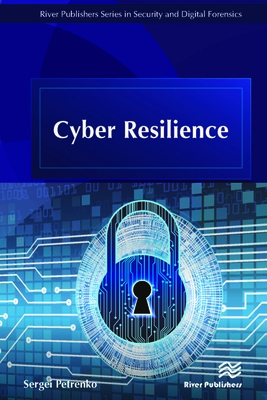
Cyber Resilience
暫譯: 網路韌性
Petrenko, Sergei
- 出版商: Charles River Media
- 出版日期: 2019-10-02
- 售價: $5,290
- 貴賓價: 9.8 折 $5,184
- 語言: 英文
- 頁數: 492
- 裝訂: Hardcover - also called cloth, retail trade, or trade
- ISBN: 8770221162
- ISBN-13: 9788770221160
-
相關分類:
資訊安全
-
相關翻譯:
網絡彈性 (簡中版)
海外代購書籍(需單獨結帳)
商品描述
Modern cyber systems acquire more emergent system properties, as far as their complexity increases: cyber resilience, controllability, self-organization, proactive cyber security and adaptability. Each of the listed properties is the subject of the cybernetics research and each subsequent feature makes sense only if there is a previous one.Cyber resilience is the most important feature of any cyber system, especially during the transition to the sixth technological stage and related Industry 4.0 technologies: Artificial Intelligence (AI), Cloud and foggy computing, 5G +, IoT/IIoT, Big Data and ETL, Q-computing, Blockchain, VR/AR, etc. We should even consider the cyber resilience as a primary one, because the mentioned systems cannot exist without it. Indeed, without the sustainable formation made of the interconnected components of the critical information infrastructure, it does not make sense to discuss the existence of 4.0 Industry cyber-systems. In case when the cyber security of these systems is mainly focused on the assessment of the incidents' probability and prevention of possible security threats, the cyber resilience is mainly aimed at preserving the targeted behavior and cyber systems' performance under the conditions of known (about 45 %) as well as unknown (the remaining 55 %) cyber attacks.This monograph shows that modern Industry 4.0. Cyber systems do not have the required cyber resilience for targeted performance under heterogeneous mass intruder cyber-attacks. The main reasons include a high cyber system structural and functional complexity, a potential danger of existing vulnerabilities and "sleep" hardware and software tabs, as well as an inadequate efficiency of modern models, methods, and tools to ensure cyber security, reliability, response and recovery.
商品描述(中文翻譯)
現代的網路系統隨著其複雜性增加而獲得更多新興系統特性:網路韌性、可控性、自我組織、主動網路安全和適應性。每一項列出的特性都是控制論研究的主題,而每一個後續特性只有在前一個特性存在的情況下才有意義。網路韌性是任何網路系統中最重要的特性,特別是在過渡到第六個技術階段及相關的工業4.0技術時:人工智慧 (AI)、雲端和邊緣計算、5G+、物聯網/工業物聯網 (IoT/IIoT)、大數據和ETL、量子計算、區塊鏈、虛擬實境/擴增實境 (VR/AR) 等。我們甚至應該將網路韌性視為首要特性,因為上述系統無法在沒有它的情況下存在。事實上,若沒有由關鍵資訊基礎設施的互聯組件所構成的可持續形成,討論工業4.0網路系統的存在是沒有意義的。在這些系統的網路安全主要集中於評估事件的概率和預防可能的安全威脅的情況下,網路韌性主要旨在在已知(約45%)和未知(其餘55%)的網路攻擊條件下,保持目標行為和網路系統的性能。本專著顯示現代工業4.0網路系統在面對異質大規模入侵者的網路攻擊時,並不具備所需的網路韌性以實現目標性能。主要原因包括網路系統的結構和功能複雜性高、現有漏洞的潛在危險以及“休眠”硬體和軟體的隱患,以及現代模型、方法和工具在確保網路安全、可靠性、響應和恢復方面的效率不足。