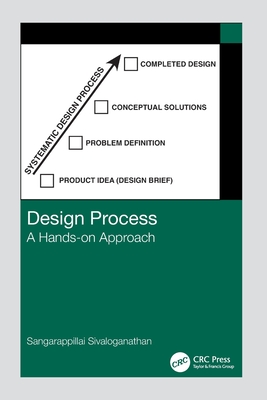
Design Process: A Hands-on Approach
暫譯: 設計流程:實作導向的方法
Sivaloganathan, Sangarappillai
- 出版商: CRC
- 出版日期: 2026-05-21
- 售價: $3,220
- 貴賓價: 9.5 折 $3,059
- 語言: 英文
- 頁數: 378
- 裝訂: Quality Paper - also called trade paper
- ISBN: 1032778202
- ISBN-13: 9781032778204
-
相關分類:
工程數學 Engineering-mathematics
海外代購書籍(需單獨結帳)
商品描述
This book introduces the systematic design process for product and engineering design projects by adopting a design model and the use of several design methods. Starting with a product idea normally outlined by the senior management as a design brief, it guides to plan the design process, define the problem, generate and choose a near-optimal or optimal solution, and complete the embodiment, all under a systematic design process model. The main strength of this book is its provision of several worked examples in the use of several design methods at all stages of the design process.
This book explains how to:
- Start with the design brief and define the problem by eliciting and refining stakeholder requirements.
- Establish the functional representation of the product as a function tree or function structure.
- Create conceptual solutions using 12 different conceptual design methods.
- Evaluate and prove that the proposed conceptual solutions are of high grade before choosing one for further development, using the decision matrix method and Pugh's controlled convergence method.
- Use the embodiment design method by Pahl and Beitz to develop the embodiment design for the chosen concept.
It is primarily written for senior undergraduate and graduate students in the fields of industrial engineering, production engineering, manufacturing engineering, mechanical engineering, and aerospace engineering.
The e-book+ version of the book, Design Process: A Hands-on Approach, complements the other versions of the book. This ebook+ version provides extensive and elaborative details about the topic to improve the overall experience of the readers. The videos that are recorded and embedded in the appropriate sections of the book outline and explicate the key features of this book, which include an overview of this book and covering critical and advanced topics at the beginning of Chapter 1 to enrich the user experience.
商品描述(中文翻譯)
本書介紹了產品和工程設計專案的系統設計過程,採用設計模型並使用多種設計方法。從高層管理通常概述的產品構想作為設計簡報開始,指導規劃設計過程、定義問題、生成並選擇接近最佳或最佳的解決方案,並在系統設計過程模型下完成具體化。本書的主要優勢在於提供了多個在設計過程各階段使用多種設計方法的實例。
本書解釋了如何:
- 從設計簡報開始,通過引出和完善利益相關者的需求來定義問題。
- 建立產品的功能表示,作為功能樹或功能結構。
- 使用12種不同的概念設計方法創建概念解決方案。
- 在選擇一個進一步開發的方案之前,使用決策矩陣法和Pugh的受控收斂法來評估並證明所提出的概念解決方案的高品質。
- 使用Pahl和Beitz的具體化設計方法來開發所選概念的具體化設計。
本書主要為工業工程、製造工程、機械工程和航空航天工程等領域的高年級本科生和研究生撰寫。
本書的電子書+版本《設計過程:實作方法》補充了其他版本的內容。這個電子書+版本提供了有關主題的廣泛和詳細的資訊,以改善讀者的整體體驗。書中適當部分錄製並嵌入的視頻概述並解釋了本書的關鍵特點,包括本書的概述以及在第一章開頭涵蓋的關鍵和進階主題,以豐富用戶體驗。
作者簡介
Sangarappillai Sivaloganathan was a curriculum-based engineer, like most of the contemporary engineering graduates. He graduated as a mechanical engineer from the University of Sri Lanka in 1976. The young man who until his mid-teens spent his life with bulls, bullock carts and a rackety bicycle went for training in the casting, forging, machining and millwright shops of the Sri Lankan Railways. Following this, after working in the Sri Lankan Cement Industry, Siva joined the University of Aston in Birmingham and obtained his Master's in Production Technology in 1982. Birmingham, which housed a third of the British Industry at that time, had a major impact in Siva's life. Siva returned to Sri Lanka and became the commissioning engineer and later the operations manager for Lanka Cement Ltd. He Joined City University, London in 1985 and obtained his PhD in Mechanical Engineering 1991. During this time, he joined the activities of the EPSRC Engineering Design Centre and later became the centre's Senior Research Assistant. He joined Brunel University in 1995 as a faculty member and continued to work there until he moved to the United Arab Emirates University in 2011. During his stay at Brunel University, he has supervised 9 PhDs, published more than 60 papers in reputed journals and conferences, and convened and functioned as chair for two international conferences in Design. He was the founding course director for the Successful MSc program in Advanced Engineering Design. Dr Siva moved to United Arab Emirates University in 2011. As the program coordinator he restructured the struggling Master of Engineering Management program. He teaches Product Development in the program from the time he joined UAEU. He presented his teaching philosophy to the ASEE annual conference in 2014 and got the best paper award in the Engineering Management division.
作者簡介(中文翻譯)
Sangarappillai Sivaloganathan 是一位以課程為基礎的工程師,與大多數當代工程畢業生相似。他於1976年從斯里蘭卡大學畢業,獲得機械工程學位。這位年輕人直到十幾歲中期都與公牛、牛車和一輛吵鬧的自行車為伴,隨後前往斯里蘭卡鐵路的鑄造、鍛造、機械加工和機械維修工廠接受訓練。之後,他在斯里蘭卡水泥工業工作,隨後加入伯明翰的阿斯頓大學,於1982年獲得生產技術碩士學位。當時伯明翰擁有三分之一的英國工業,對Siva的生活產生了重大影響。Siva回到斯里蘭卡,成為Lanka Cement Ltd.的調試工程師,後來擔任運營經理。他於1985年加入倫敦城市大學,並於1991年獲得機械工程博士學位。在此期間,他參與了EPSRC工程設計中心的活動,並後來成為該中心的高級研究助理。他於1995年加入布魯內爾大學,成為教職員,並在那裡工作直到2011年轉至阿拉伯聯合酋長國大學。在布魯內爾大學期間,他指導了9位博士生,並在知名期刊和會議上發表了60多篇論文,還主持了兩場國際設計會議。他是成功的高級工程設計碩士課程的創始課程主任。Dr. Siva於2011年轉至阿拉伯聯合酋長國大學,作為課程協調員,他重組了陷入困境的工程管理碩士課程。自加入UAEU以來,他一直教授產品開發課程。他於2014年在ASEE年會上展示了他的教學理念,並在工程管理部門獲得最佳論文獎。