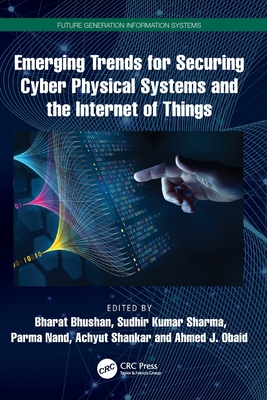
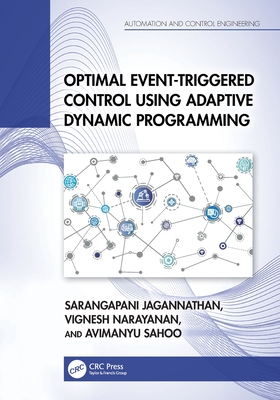
Optimal Event-Triggered Control Using Adaptive Dynamic Programming
暫譯: 最佳事件觸發控制之自適應動態規劃
Jagannathan, Sarangapani, Narayanan, Vignesh, Sahoo, Avimanyu
- 出版商: CRC
- 出版日期: 2026-05-22
- 售價: $2,740
- 貴賓價: 9.5 折 $2,603
- 語言: 英文
- 頁數: 333
- 裝訂: Quality Paper - also called trade paper
- ISBN: 1032791500
- ISBN-13: 9781032791500
-
相關分類:
Reinforcement
海外代購書籍(需單獨結帳)
商品描述
Optimal Event-triggered Control using Adaptive Dynamic Programming discusses event triggered controller design which includes optimal control and event sampling design for linear and nonlinear dynamic systems including networked control systems (NCS) when the system dynamics are both known and uncertain. The NCS are a first step to realize cyber-physical systems (CPS) or industry 4.0 vision. The authors apply several powerful modern control techniques to the design of event-triggered controllers and derive event-trigger condition and demonstrate closed-loop stability. Detailed derivations, rigorous stability proofs, computer simulation examples, and downloadable MATLAB(R) codes are included for each case.
The book begins by providing background on linear and nonlinear systems, NCS, networked imperfections, distributed systems, adaptive dynamic programming and optimal control, stability theory, and optimal adaptive event-triggered controller design in continuous-time and discrete-time for linear, nonlinear and distributed systems. It lays the foundation for reinforcement learning-based optimal adaptive controller use for infinite horizons. The text then:
- Introduces event triggered control of linear and nonlinear systems, describing the design of adaptive controllers for them
- Presents neural network-based optimal adaptive control and game theoretic formulation of linear and nonlinear systems enclosed by a communication network
- Addresses the stochastic optimal control of linear and nonlinear NCS by using neuro dynamic programming
- Explores optimal adaptive design for nonlinear two-player zero-sum games under communication constraints to solve optimal policy and event trigger condition
- Treats an event-sampled distributed linear and nonlinear systems to minimize transmission of state and control signals within the feedback loop via the communication network
- Covers several examples along the way and provides applications of event triggered control of robot manipulators, UAV and distributed joint optimal network scheduling and control design for wireless NCS/CPS in order to realize industry 4.0 vision
An ideal textbook for senior undergraduate students, graduate students, university researchers, and practicing engineers, Optimal Event Triggered Control Design using Adaptive Dynamic Programming instills a solid understanding of neural network-based optimal controllers under event-sampling and how to build them so as to attain CPS or Industry 4.0 vision.
商品描述(中文翻譯)
最佳事件觸發控制的自適應動態規劃討論了事件觸發控制器的設計,包括對於線性和非線性動態系統(包括網絡控制系統 NCS)的最佳控制和事件取樣設計,無論系統動態是已知還是未知。NCS 是實現網絡物理系統(CPS)或工業 4.0 願景的第一步。作者將幾種強大的現代控制技術應用於事件觸發控制器的設計,推導事件觸發條件並展示閉環穩定性。每個案例中都包含詳細的推導、嚴謹的穩定性證明、計算機模擬示例以及可下載的 MATLAB(R) 代碼。
本書首先提供有關線性和非線性系統、NCS、網絡缺陷、分佈式系統、自適應動態規劃和最佳控制、穩定性理論以及線性、非線性和分佈式系統的連續時間和離散時間的最佳自適應事件觸發控制器設計的背景。這為基於強化學習的最佳自適應控制器在無限時間範圍內的使用奠定了基礎。接下來的內容包括:
- 介紹線性和非線性系統的事件觸發控制,描述自適應控制器的設計
- 呈現基於神經網絡的最佳自適應控制和線性及非線性系統在通信網絡中的博弈理論公式化
- 通過神經動態規劃處理線性和非線性 NCS 的隨機最佳控制
- 探索在通信約束下的非線性雙人零和博弈的最佳自適應設計,以解決最佳策略和事件觸發條件
- 處理事件取樣的分佈式線性和非線性系統,以最小化通過通信網絡的反饋回路中的狀態和控制信號的傳輸
- 沿途涵蓋幾個示例,並提供機器人操控器、無人機和分佈式聯合最佳網絡調度及控制設計的事件觸發控制應用,以實現工業 4.0 願景
這本書是高年級本科生、研究生、大學研究人員和在職工程師的理想教科書,最佳事件觸發控制設計的自適應動態規劃使讀者對基於神經網絡的最佳控制器在事件取樣下的理解更加深入,並學會如何構建這些控制器以實現 CPS 或工業 4.0 願景。
作者簡介
Dr. Sarangapani Jagannathan is a Curator's Distinguished Professor and Rutledge-Emerson chair of Electrical and Computer Engineering at the Missouri University of Science and Technology (former University of Missouri-Rolla). He has a joint Professor appointment in the Department of Computer Science. He served as a Director for the NSF Industry/University Cooperative Research Center on Intelligent Maintenance Systems for 13 years. His research interests include learning, adaptation and control, secure human-cyber-physical systems, prognostics, and autonomous systems/robotics. Prior to his Missouri S&T appointment, he served as a faculty at University of Texas at San Antonio and as a staff engineer at Caterpillar, Peoria.
He has coauthored over 500 refereed IEEE Transaction/journal and conference articles, written 18 book chapters, authored/co-edited 6 books, received 21 US patents and one patent defense publication. He delivered around 30 plenary and keynote talks in various international conferences and supervised to graduation 33 doctoral and 31 M.S thesis students. He was a co-editor for the IET book series on control from 2010 until 2013 and served on many editorial boards including IEEE Systems, Man and Cybernetics, and has been on organizing committees of several IEEE Conferences. He is currently an associate editor for IEEE Transactions on Neural Networks and Learning Systems and others.
He received many awards including the 2020 Best Associate Editor Award, 2018 IEEE CSS Transition to Practice Award, 2007 Boeing Pride Achievement Award, 2001 Caterpillar Research Excellence Award, 2021 University of Missouri Presidential Award for sustained career excellence, 2001 University of Texas Presidential Award for early career excellence, and 2000 NSF Career Award. He also received several faculty excellence and teaching excellence and commendation awards. As part of his NSF I/UCRC, he transitioned many technologies and software products to industrial entities saving millions of dollars. He is a Fellow of the IEEE, National Academy of Inventors, and Institute of Measurement and Control, UK, Institution of Engineering and Technology (IET), UK and Asia-Pacific Artificial Intelligence Association.
Dr. Vignesh Narayanan is an Assistant Professor in the AI institute and the Department of Computer Science and Engineering at University of South Carolina (USC), Columbia. He is also affiliated with the Carolina Autism and Neurodevelopment research center at USC. His research interests include dynamical systems and networks, artificial intelligence, data science, learning theory, and computational neuroscience.
He received his B.Tech. Electrical and electronics engineering and M. Tech. Electrical engineering degrees from SASTRA University, Thanjavur, and the National Institute of Technology, Kurukshetra, India, respectively, in 2012 and 2014, and his Ph.D. degree from Missouri University of Science and Technology, Rolla, MO in 2017. He was a post-doctoral research associate at Washington University in St. Louis, before joining the AI institute of USC.
Avimanyu Sahoo received his Ph.D. in Electrical Engineering from Missouri University of Science and Technology, Rolla, MO, USA, in 2015 and a Master of Technology (MTech) from the Indian Institute of Technology (BHU), Varanasi, India, in 2011. He is currently an Assistant Professor in the Electrical and Computer Engineering Department at the University of Alabama in Huntsville (UAH), AL. Before joining UAH, Dr. Sahoo was an Associate Professor in the Division of Engineering Technology at Oklahoma State University, Stillwater, OK.
Dr. Sahoo's research interests include learning-based control and its applications in lithium-ion battery pack modeling, diagnostics, prognostics, cyber-physical systems (CPS), and electric machinery health monitoring. Currently, his research focuses on developing intelligent battery management systems (BMS) for lithium-ion battery packs used onboard electric vehicles, computation, and communication-efficient distributed intelligent control schemes for cyber-physical systems using approximate dynamic programming, reinforcement learning, and distributed adaptive state estimation. He has published over 45 journal and conference articles, including IEEE Transactions on Neural Networks and Learning Systems, Cybernetics, and Industrial Electronics. He is also an Associate Editor in IEEE Transactions on Neural Networks and Learning Systems and Frontiers in Control Engineering: Nonlinear Control.
作者簡介(中文翻譯)
Dr. Sarangapani Jagannathan 是密蘇里科技大學(前密蘇里羅拉大學)電機與計算機工程的特聘教授及Rutledge-Emerson講座教授。他在計算機科學系擔任聯合教授。他曾擔任國家科學基金會(NSF)智能維護系統產學合作研究中心的主任,任期長達13年。他的研究興趣包括學習、適應與控制、安全的人類-網路-物理系統、預測技術以及自主系統/機器人技術。在加入密蘇里科技大學之前,他曾在德克薩斯州聖安東尼奧大學任教,並在卡特彼勒公司(Caterpillar)擔任工程師。
他共同撰寫了超過500篇經過審核的IEEE期刊和會議文章,撰寫了18章書籍,主編/共同編輯了6本書籍,獲得21項美國專利及一項專利防禦出版物。他在各種國際會議上發表了約30場全體會議和主題演講,並指導33名博士生和31名碩士生順利畢業。他曾擔任IET控制系列書籍的共同編輯,任期從2010年到2013年,並在多個編輯委員會中任職,包括IEEE系統、人類與控制論,並參與多個IEEE會議的組織委員會。目前,他是IEEE神經網路與學習系統期刊的副編輯及其他期刊的副編輯。
他獲得了多項獎項,包括2020年最佳副編輯獎、2018年IEEE CSS實踐轉型獎、2007年波音驕傲成就獎、2001年卡特彼勒研究卓越獎、2021年密蘇里大學總統獎以表彰其持續的職業卓越、2001年德克薩斯大學總統獎以表彰其早期職業卓越,以及2000年NSF職業獎。他還獲得了幾項教學卓越和表彰獎。作為其NSF I/UCRC的一部分,他將許多技術和軟體產品轉移到工業實體,節省了數百萬美元。他是IEEE、全國發明家學院、英國計量與控制學會、英國工程與技術學會(IET)及亞太人工智慧協會的會士。
Dr. Vignesh Narayanan 是南卡羅來納大學(USC)人工智慧研究所及計算機科學與工程系的助理教授。他同時也與USC的卡羅來納自閉症與神經發展研究中心有關聯。他的研究興趣包括動態系統與網路、人工智慧、數據科學、學習理論及計算神經科學。
他於2012年和2014年分別在印度坦賈武爾的SASTRA大學獲得電氣與電子工程學士學位及電氣工程碩士學位,並於2017年在密蘇里科技大學獲得博士學位。在加入USC的人工智慧研究所之前,他曾在聖路易斯的華盛頓大學擔任博士後研究助理。
Avimanyu Sahoo 於2015年在美國密蘇里科技大學獲得電氣工程博士學位,並於2011年在印度瓦拉納西的印度理工學院(BHU)獲得技術碩士學位。目前,他是阿拉巴馬州亨茨維爾的阿拉巴馬大學(UAH)電機與計算機工程系的助理教授。在加入UAH之前,Dr. Sahoo曾在俄克拉荷馬州立大學的工程技術部門擔任副教授。
Dr. Sahoo的研究興趣包括基於學習的控制及其在鋰離子電池包建模、診斷、預測、網路物理系統(CPS)及電機健康監測中的應用。目前,他的研究重點是為用於電動車輛的鋰離子電池包開發智能電池管理系統(BMS),以及使用近似動態規劃、強化學習和分散式自適應狀態估計的計算和通信高效的分散式智能控制方案。他已發表超過45篇期刊和會議文章,包括IEEE神經網路與學習系統期刊、控制論及工業電子學期刊。他也是IEEE神經網路與學習系統期刊及《控制工程前沿:非線性控制》的副編輯。