Plasma Electronics: Applications in Microelectronic Device Fabrication
暫譯: 等離子體電子學:在微電子裝置製造中的應用
Makabe, Toshiaki, Petrovic, Zoran Lj
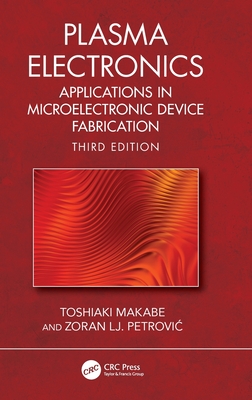
- 出版商: CRC
- 出版日期: 2026-05-14
- 售價: $6,270
- 貴賓價: 9.5 折 $5,956
- 語言: 英文
- 頁數: 389
- 裝訂: Hardcover - also called cloth, retail trade, or trade
- ISBN: 1041192231
- ISBN-13: 9781041192237
-
相關分類:
電子學 Eletronics
海外代購書籍(需單獨結帳)
商品描述
More than two decades have passed since the first edition of Plasma Electronics was published. Today, we are entering an era that demands increasingly sophisticated control and design of plasma sources and related surface technologies for micro- and nano-electronic device fabrication. Plasma technology, based on surface interactions, continues to expand into emerging fields including biotechnology, medical science, and environmental applications.
Plasma Electronics: Applications in Microelectronic Device Fabrication, Third Edition, explains the fundamental physics and numerical methods essential for advancing these technologies from laboratory research to manufacturing-scale modeling and design of plasma sources and processes. This comprehensive resource has established itself as the standard reference for scientists, engineers, and graduate students working with weakly ionized, non-equilibrium plasmas. The book begins with a brief history of elementary processes and collective properties in low-temperature plasma, providing readers with essential context for understanding current developments and future prospects. Beyond traditional plasma knowledge, the content is systematically organized to enable quantitative understanding of surface-reactive plasmas through collision physics in gases and on surfaces, stochastic Boltzmann equation applications, electron and ion kinetics fundamentals, computational physics methodologies and plasma source design and optimization. The text addresses practical challenges head-on, including predictive modeling of spatiotemporally changing surfaces in contact with plasma through advanced numerical methods and control strategies. This approach ensures readers can apply theoretical knowledge to real-world manufacturing scenarios. Applications of negative charges generated in a low-temperature plasma will open up the world with innovative technologies. In this third edition, macroscopic functions of negative charges are added and elucidated for representative examples, including negative charge injection into a micro-structured surface on the electrode and the sustainability of active bulk plasma.
This book remains a unique and indispensable resource for researchers and engineers seeking to master radiofrequency collisional plasmas and their structure, function, and applications in today's rapidly evolving technological landscape.
Key Features:
- Provides essential fundamental physics and advanced numerical methods that enable researchers to transition plasma technologies from laboratory to factory
- Provides systematic coverage of surface-reactive plasma physics
- Addresses expanding plasma technology applications across biotechnology, medical science, and environmental fields
商品描述(中文翻譯)
超過二十年已經過去,自從《Plasma Electronics》的第一版出版以來。今天,我們正進入一個需要對等離子體源及相關表面技術進行越來越精細控制和設計的時代,以便製造微型和納米電子設備。基於表面互動的等離子體技術,持續擴展到包括生物技術、醫學科學和環境應用等新興領域。
《Plasma Electronics: Applications in Microelectronic Device Fabrication, Third Edition》解釋了推進這些技術所需的基本物理學和數值方法,從實驗室研究到製造規模的等離子體源和過程的建模與設計。這本全面的資源已經成為科學家、工程師和研究生在處理弱電離、非平衡等離子體時的標準參考書。該書以低溫等離子體中的基本過程和集體性質的簡要歷史開始,為讀者提供了理解當前發展和未來前景的基本背景。除了傳統的等離子體知識外,內容系統性地組織,以便通過氣體和表面上的碰撞物理、隨機玻爾茲曼方程應用、電子和離子動力學基礎、計算物理方法以及等離子體源設計和優化來實現對表面反應性等離子體的定量理解。文本直接面對實際挑戰,包括通過先進的數值方法和控制策略對與等離子體接觸的時空變化表面的預測建模。這種方法確保讀者能夠將理論知識應用於現實世界的製造場景。在低溫等離子體中產生的負電荷的應用將開啟創新技術的世界。在這第三版中,增加並闡明了負電荷的宏觀功能,並提供了代表性例子,包括將負電荷注入電極上的微結構表面以及活性體積等離子體的可持續性。
這本書仍然是研究人員和工程師掌握射頻碰撞等離子體及其結構、功能和在當今快速發展的技術環境中的應用的獨特且不可或缺的資源。
主要特點:
- 提供基本的物理學和先進的數值方法,使研究人員能夠將等離子體技術從實驗室轉移到工廠
- 系統性地涵蓋表面反應性等離子體物理
- 涉及生物技術、醫學科學和環境領域中不斷擴展的等離子體技術應用
作者簡介
Toshiaki Makabe received his BSc, MSc, and Ph.D. degrees in electrical engineering all from Keio University. He became a Professor of Electronics and Electrical Engineering in the Faculty of Science and Technology at Keio University in 1991.
Zoran Lj. Petrovic obtained his Master's degree in the Department of Applied Physics, Faculty of Electrical Engineering at the University of Belgrade, and earned his Ph.D. from the Australian National University.
作者簡介(中文翻譯)
真木俊明於慶應義塾大學獲得電機工程的學士、碩士及博士學位。1991年,他成為慶應義塾大學科學與技術學院電子與電機工程的教授。
佐蘭·Lj·彼得羅維奇在貝爾格萊德大學電機工程學院應用物理系獲得碩士學位,並在澳洲國立大學獲得博士學位。